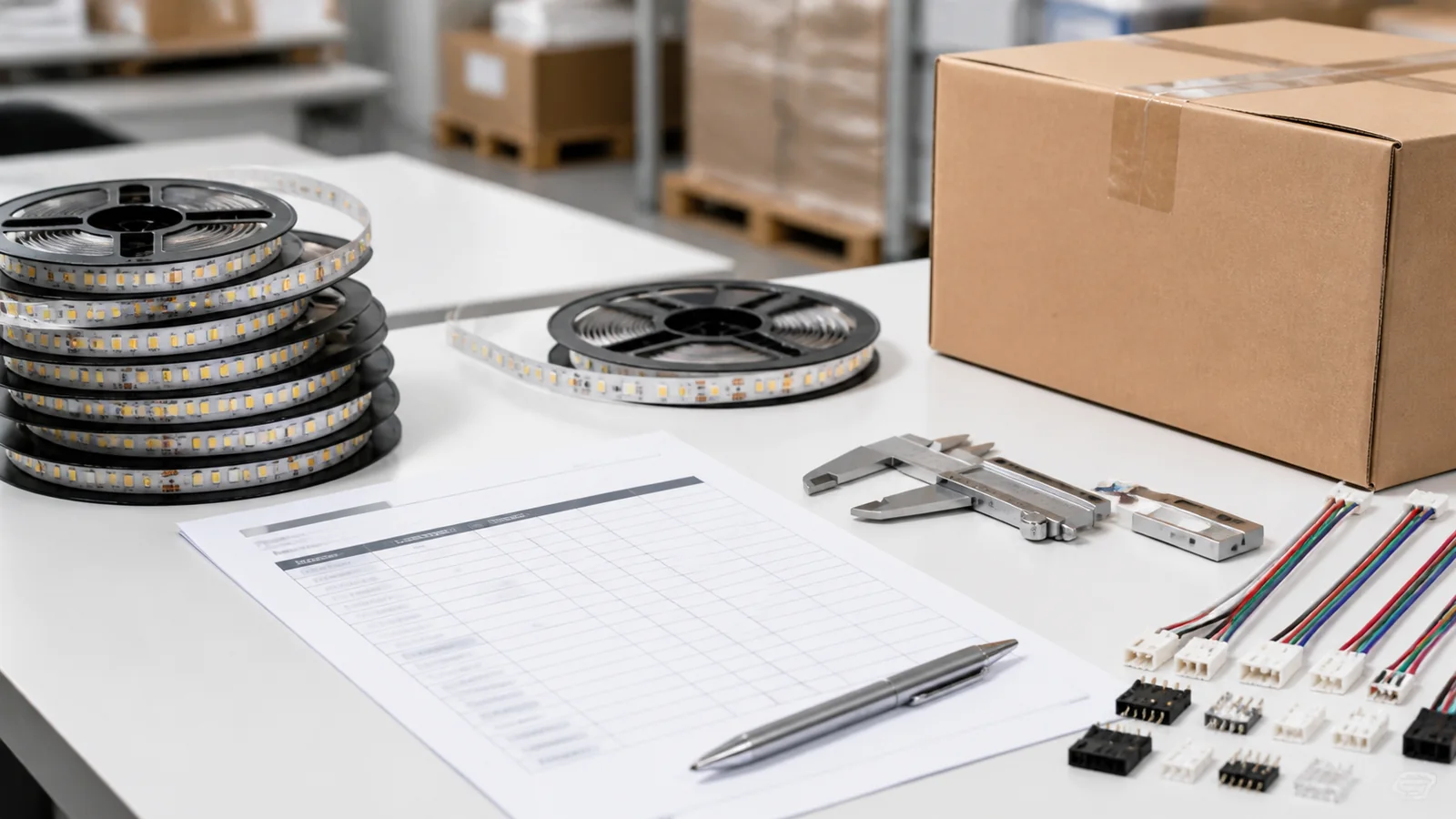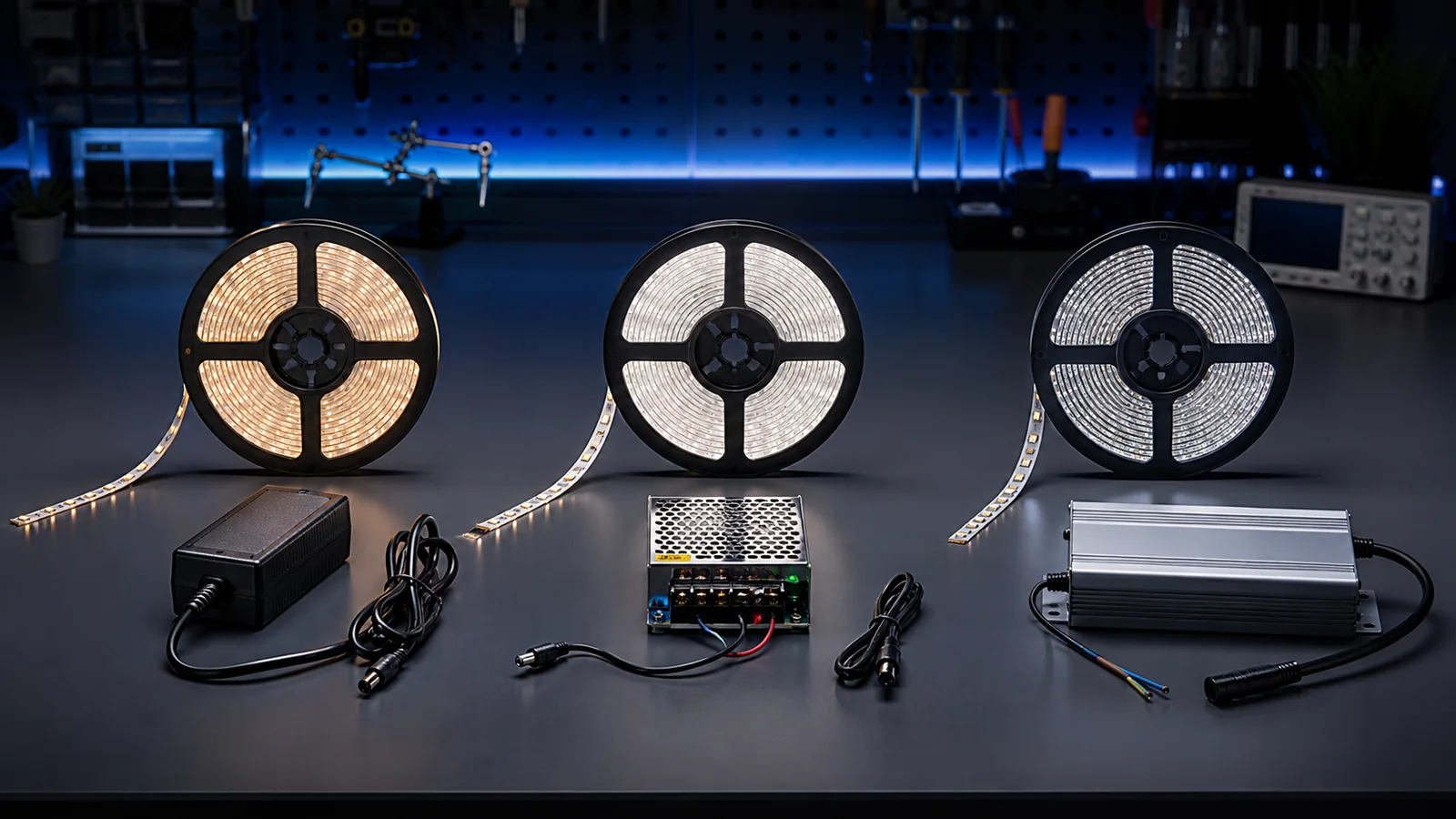
A reliable LED strip system starts with four calculations: total load, driver headroom, circuit current and voltage drop. The strip, driver, controller, cable and feed points must be designed as one system. A large power supply alone does not solve voltage drop along a narrow PCB or undersized cable.
Four Inputs You Need
Before calculating anything, confirm:
- Strip voltage: normally 12V DC or 24V DC for low-voltage projects.
- Rated power per meter: use the model datasheet, not LED count alone.
- Length on each electrical feed: separate the total project length from the length of one powered run.
- Cable route: conductor size, one-way cable length and installation environment.
Also record the controller type, dimming protocol, IP requirement and ambient temperature. Drivers can need derating in hot or enclosed locations.
LED Strip Power Supply Formula
Use this first-pass calculation:
Power supply wattage = strip watts per meter × powered meters × headroom factor
A common planning factor is 1.2, which leaves 20% headroom. The final allowance should follow the driver manufacturer’s loading and temperature guidance.
For a 24V strip rated at 10W/m over 8m:
- Strip load: 10W/m × 8m = 80W
- With 20% headroom: 80W × 1.2 = 96W
- Select the next suitable standard driver rating above the calculated requirement, provided its output voltage, dimming method and approvals match the project.
Current is calculated from amps = watts ÷ volts. The same 80W load draws about 3.33A at 24V, while an 80W load at 12V draws about 6.67A. This is one reason 24V is often preferred for longer commercial low-voltage runs.
What Causes LED Strip Voltage Drop?
Voltage drop is the loss between the power supply and the load. It occurs in both the feed cable and the copper tracks on the strip. Typical symptoms are lower brightness or color shift toward the far end.
The main variables are:
- Higher current
- Longer cable or strip run
- Smaller conductor cross-section
- Narrower or lighter-copper PCB
- Higher strip power
- High-resistance connectors or solder joints
Do not use a universal rule such as “all 24V strips run five meters.” Two 24V products with different power, PCB width and copper weight can require different feed layouts.
Feed-Point Planning
For multiple strips, use parallel branch wiring from a properly protected distribution point. Avoid connecting long reels end-to-end and expecting one feed to carry the entire load.
Common layouts include:
- Single-end feed: suitable when measured voltage and brightness remain within the project limit.
- Double-end feed: supplies the same strip from both ends where the product and electrical design permit it.
- Center feed: divides one run into two shorter electrical paths.
- Multiple injection points: useful for long contours, high-power strips and large installations.
Each branch, connector, controller channel and cable must be rated for its actual current. Follow local rules for overcurrent protection, enclosure and cable installation.
Worked Examples
Example A: 12V cabinet sections
Six separate 1m sections each use an 8W/m strip. Total strip power is 48W; with 20% headroom, the planning value is 57.6W. Wire the sections as parallel branches rather than one 6m daisy chain. Confirm the cable drop to the most distant cabinet.
Example B: 24V retail shelving
Ten shelves each use 2m of 12W/m strip. Total load is 240W, but the design may be clearer and safer with several driver zones rather than one large central driver. Divide the shelves by controller channel, cable route and maintenance access, then calculate each zone separately.
Example C: long architectural cove
A 30m cove is not automatically one 30m powered run. Divide it into shorter feed sections based on the selected strip’s maximum recommended length and measured performance. Place drivers where they remain accessible and within their environmental limits.
LED Strip System Buyer Checklist
Ask the supplier to confirm:
- Rated voltage, power tolerance and reel length
- Maximum recommended powered length for the exact model
- PCB width and copper specification where relevant
- Cut interval and copper-pad layout
- Driver loading recommendation and dimming compatibility
- Connector current rating and IP construction
- Cable size assumptions used in any wiring proposal
- Test method for far-end voltage and brightness consistency
For a wholesale or project quotation, send the strip model, total quantity, length of each run, cable distance, control method and installation environment. This information produces a more useful proposal than requesting only “a power supply for 50 meters.”
Need a model-matched calculation for a bulk project? Send the project details or contact the export team on WhatsApp.
Catalog & Sourcing Note
This article is prepared from our current product catalog and B2B specification workflow. Electrical, waterproofing and installation requirements vary by model and market, so confirm the final specification and approved sample before ordering.
Discuss Your Specification