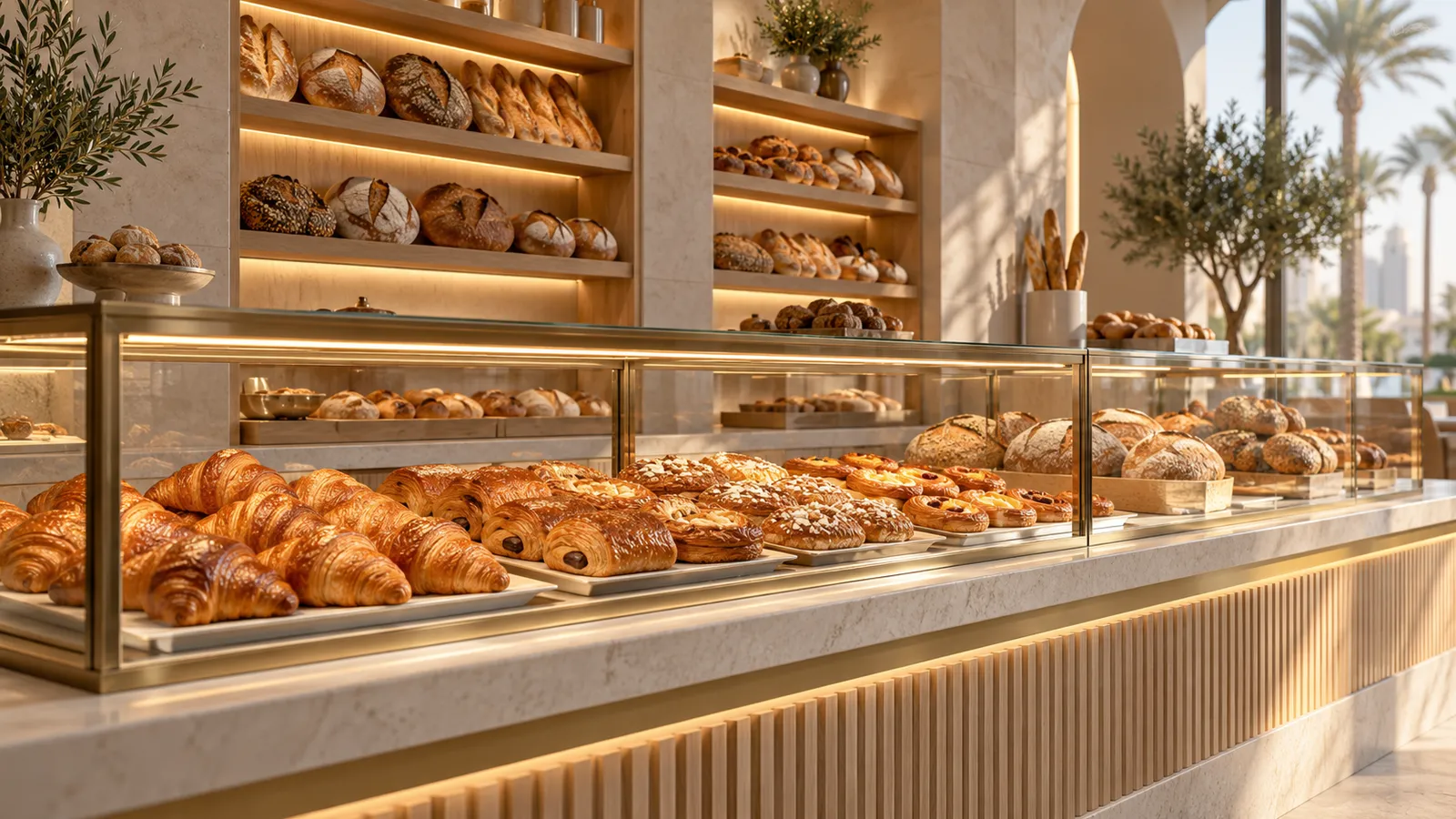
For dry bread shelves, begin with a concealed line beneath the shelf above, directed toward the merchandise. For a glass pastry counter, test a shielded line in the case’s upper frame before placing lighting at the shelf edge. Chilled cake cabinets and heated displays require the equipment manufacturer’s lighting requirements to be settled first.
Compare the five starting details below for product visibility, tray shadows and reflections in a UAE or Saudi bakery fit-out. Each must also allow cleaning access and suit the equipment. The recommendations are design judgments for a full fixture mock-up, with suitability assessed for each cabinet; they do not report measured rankings.
Compare five positions using stocked trays
| Layout | Best starting use | Main issue to inspect | Acceptance check |
|---|---|---|---|
| Concealed under-shelf profile | Dry bread racks with repeated shelves | Tray lips and tall loaves cast shadows | Stock the rack and inspect the lower shelves |
| Shielded upper-frame line | Glass pastry counters | Bright lines reflected toward customers | Review normal browsing and staff positions |
| Side-mounted vertical profiles | Tall cake displays or deep display bays | Uneven highlights and obstructed product views | Test the populated bay with doors closed |
| Removable case-maker lighting module | Chilled or heated display equipment | Temperature, condensation and cleaning conditions | Follow the exact case maker’s replacement specification |
| External niche or counter-base line | Architectural emphasis outside the food enclosure | Decorative brightness distracts from merchandise | Dim it independently and compare product visibility |
1. Under-shelf profiles for dry bread racks
Conceal the emitting surface behind the shelf lip and adjust the direction toward the displayed bread. Test the actual tray depth and loading. A profile hidden too far back can leave the front of the product in shadow, especially where the shelf above projects forward.
Load the rack with the planned loaf heights and baskets. Check the lowest shelf from the customer’s position, then confirm that trays can be removed without striking the profile or cable. Provide access for cleaning and replacement without dismantling the whole rack.
2. Upper-frame lighting for glass pastry counters
Mount a candidate line within a shielded upper-frame detail so it illuminates the trays while staying outside the customer’s direct view. Evaluate the front glass at several normal browsing positions. A continuous bright reflection can obscure the pastries even when the tray receives plenty of light.
Review the staff side as well. Doors, hinges and serving access must remain usable. Move or shield the profile during the mock-up if reflections cross the main product view. A diffuser alone may not resolve an unsuitable source position.
3. Vertical profiles for tall displays
Test side-mounted lines where deep shelves or tall products restrict light from above. Compare each side separately before accepting the combined scene. Position the profiles clear of the product view and coordinate them with the cabinet’s doors.
Inspect pale icing, dark chocolate and reflective packaging in the same trial. Their highlights and contrast can respond differently to the lighting position. Choose this detail when the loaded cabinet remains readable and the profile does not interfere with cleaning or stocking.
4. Replaceable lighting modules specified by the case maker
For chilled and heated equipment, ask the case manufacturer for its specified lighting module and replacement method. Review the module together with its mounting, connections and environmental conditions. Matching voltage alone does not make an indoor decorative strip a suitable substitute.
Keep air paths, drains and service access as the equipment maker requires. Establish any condensation, cleaning-chemical or elevated-temperature exposure before choosing a replacement. A waterproof tape label alone does not establish suitability for heat, food contact or the complete cleaning process.
5. External niche and counter-base accents
Use a separate architectural line to define a bread alcove or counter base outside the food enclosure. Its role is visual emphasis. It does not replace useful illumination on the trays or the room’s task lighting.
Give the accent its own control so the merchandise team can compare brightness levels. Check whether the base or perimeter pulls attention away from the products. Keep equipment accessible for replacement and protect the detail against the expected floor or counter-cleaning routine.
Choose appearance with the food and equipment teams
Signify’s food-light guidance describes specialized spectral recipes for different food categories, including bakery displays. Such recipes concern its own light engines. A matching CCT label on another tape does not demonstrate an identical spectrum or the same visual result.
Review actual bread crusts, pastry finishes, icing and printed labels under candidate white-light options. Include the shop’s ambient lighting in the comparison. Record the accepted tape variant and control setting; avoid changing color appearance by bay without a merchandising reason.
Ask the operator and case supplier to define cleaning, electrical and food-area requirements. Keep light sources enclosed and clear of direct food contact unless the complete equipment has been specifically assessed for that use. This shortlist makes no shelf-life, hygiene or sales-increase claim.
Turn the accepted detail into an order schedule
Record each rack or cabinet reference, lighting position, tape or module identity, profile, cover and mounting method. Include circuit loads, driver locations and service access. For equipment supplied as a complete case, obtain the maker’s replacement-part information before ordering independent tape.
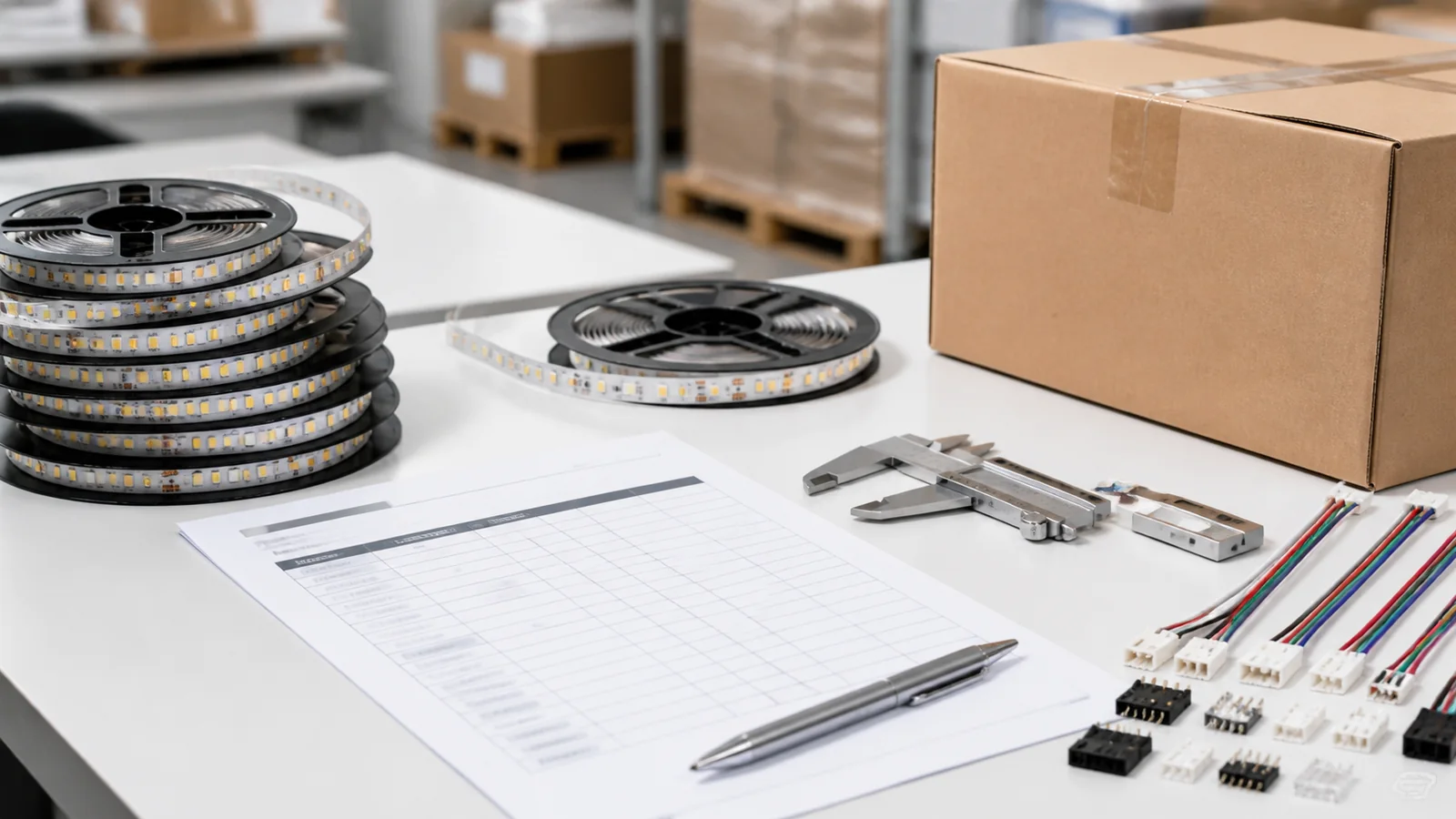
For dry joinery details using a separately selected tape, review the COB range within the full mock-up. LEDStripStar’s MOQ is 500 meters for standard products and 2,000 meters for custom products. The ordinary warranty is 2 years; confirm the applicable order terms and variant quantities.
Send the fixture drawing and agreed display conditions for a quotation. Include the case supplier’s requirements where relevant, plus the stocked-tray observations that determined the lighting position.
Catalog & Sourcing Note
This article is prepared from our current product catalog and B2B specification workflow. Electrical, waterproofing and installation requirements vary by model and market, so confirm the final specification and approved sample before ordering.
Discuss Your Specification