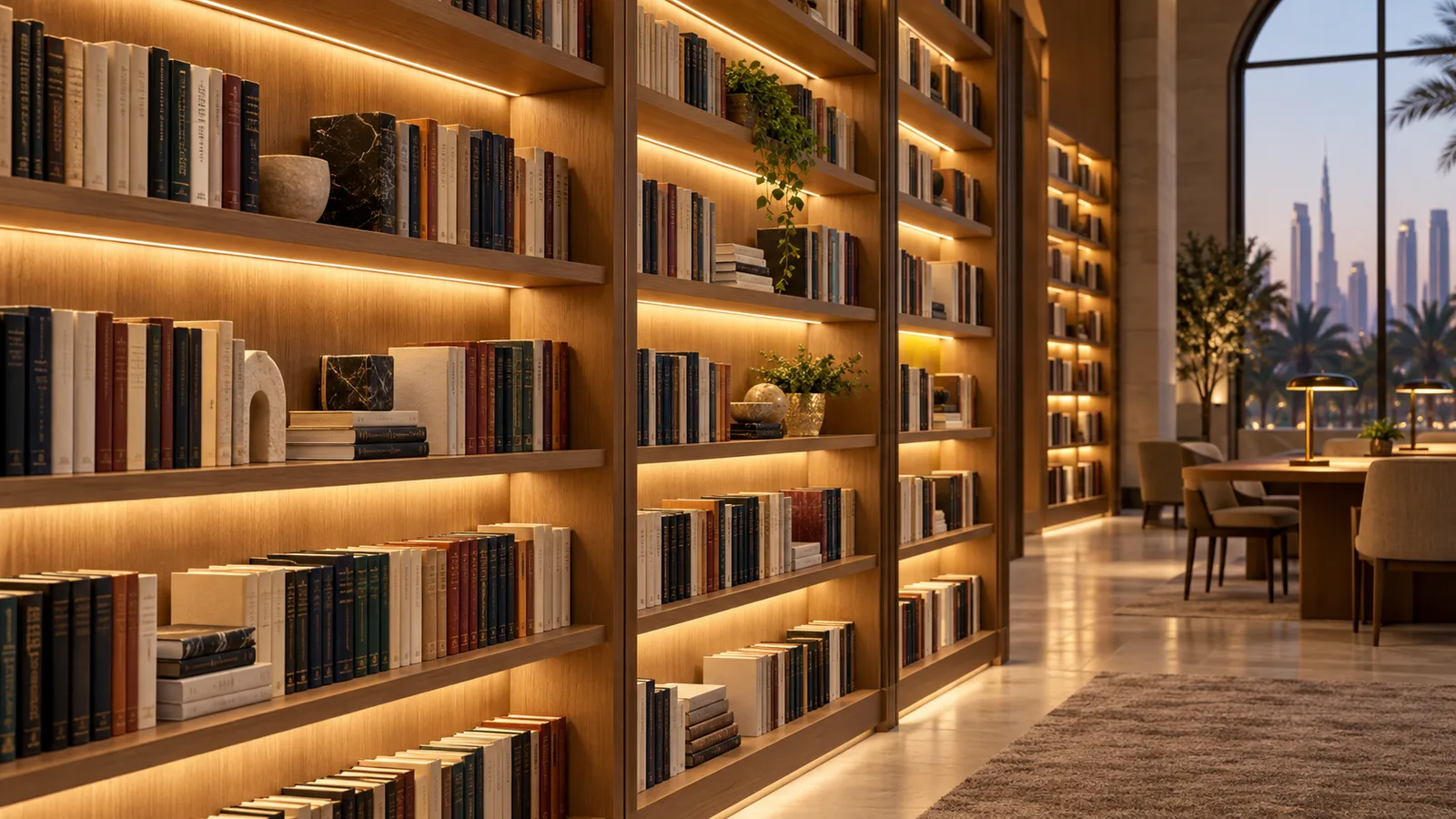
For a GCC library bookshelf, start by making book spines readable without exposing a bright strip to people standing or bending beside the shelf. A concealed front-mounted shelf light is a useful first candidate. Backlighting and decorative outlines have different roles, while reading tables need their own task-lighting assessment.
These five layouts are selected for spine visibility, loaded-shelf shadows, source concealment, shelf adjustment and replacement access. Use the actual joinery and book arrangement to choose for a UAE or Saudi project. Have the project team confirm its lighting targets and applicable requirements before ordering repeated bays.
Separate finding a book from reading it
Inspect vertical spines from the aisle, then check any place intended for reading a page. ERCO’s shelf-lighting guidance describes illuminating shelving so colors and material details can be recognized. Its Lucy task-light guidance treats desk illumination as a distinct visual task. Apply those distinctions to the library sample without treating either source as a specification for these LED strip layouts.
Load the sample with real books: a tall book may cast a shadow or hide a source that looked effective on an empty shelf. Include representative spine finishes and shelf heights, then inspect from the intended aisle positions.
Five layouts worth comparing
| Layout | Useful role | Main limitation to check |
|---|---|---|
| Concealed light beneath the front shelf edge | Illuminating spines on the shelf below | Source visibility and shadows from tall books |
| Angled recessed shelf-front profile | Directing light toward the book face | Assembly fit and beam after the diffuser |
| Vertical side channels | Side illumination where shelf wiring is difficult | Books blocking light across a wide bay |
| Concealed rear shelf light | Decorative depth behind selected displays | Rear glow may leave spine faces dark |
| Top-of-bookcase uplight | Ambient contribution above a fixed case | Does not replace lower-shelf or reading light |
1. Concealed light beneath the front shelf edge
Trial a profile under the front edge of each relevant shelf, directed toward the spines below. Use a lip or recess where the joinery allows source concealment. Inspect it from across the aisle and while bending to the bottom shelf; concealing it from an upright adult alone is insufficient.
Test with books pulled forward as well as pushed back. Confirm that retrieving a book does not snag wiring or expose a fragile connection. Adjust the geometry if the source lights only the book tops.
2. Angled recessed shelf-front profile
An angled section can direct light onto the book face. Compare the complete profile, including its diffuser, clips and end caps, with the joinery drawing. The strip’s width alone does not establish the outside width of the assembly.
Use the profile-selection guide before machining the shelf. Approval should include the real recess and shelf edge: a loose profile on a bench does not show the installed shadow.
3. Vertical side channels
Side channels may suit a fixed bay where horizontal shelves must remain adjustable. Fill the bay with tall and short books to see where one row blocks another. Wide bays may need a different arrangement if the far side remains poorly lit.
Keep controls, connections and cables out of book-handling paths. If staff move shelves, agree which parts can move and which wiring must stay fixed. Do not allow a shelf adjustment to strain a lead or conceal a damaged joint.
4. Concealed rear shelf light
A rear glow can give depth to a curated display or an open-backed decorative section. Assess it separately from the spine-lighting task. It may leave the fronts difficult to read even when the back panel looks bright.
For rare books or conservation-managed collections, ask the responsible specialist to set exposure limits and approve the lighting. A CRI label or a pleasing sample does not establish conservation suitability.
5. Top-of-bookcase uplight
Uplight above a fixed bookcase can contribute to the surrounding room. Check the ceiling finish and whether the source is visible from stairs, mezzanines or other elevated viewpoints. Keep access for cleaning and replacement.
Retain a separate check of lower shelves and reading places. A bright ceiling can coexist with unreadable spines or an inadequately lit page.
Match the source to the complete shelf section
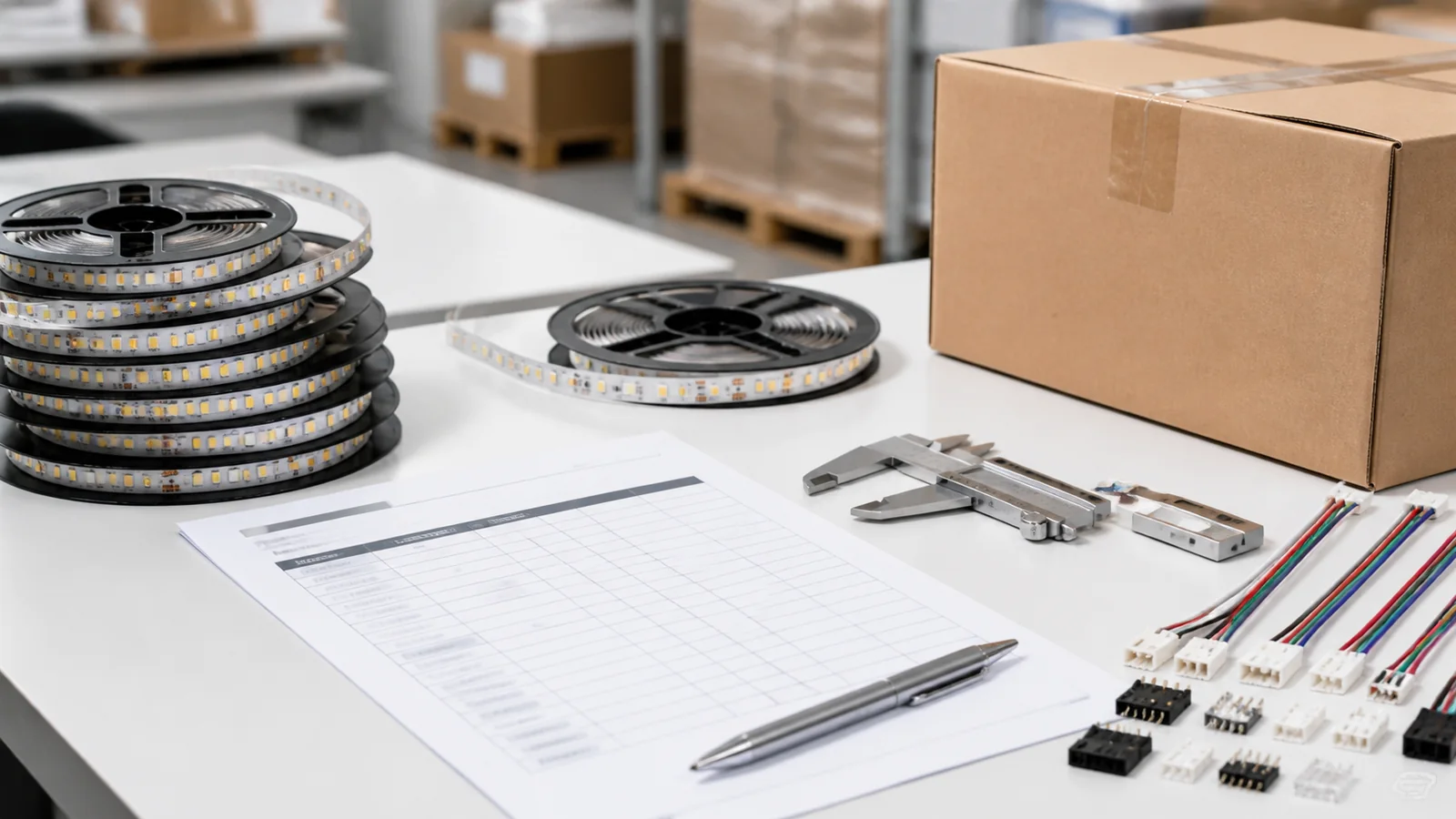
The 5mm CRI90 COB and 8mm CRI95 COB families are candidates for an assembled sample. Their widths help assess source fit; their CRI labels do not predict delivered light on a book. Confirm the ordered voltage, color and construction, then check the profile’s usable base and outside dimensions.
Compare cover colors and reflective jackets under the selected setting. A continuous-looking source can still produce a distracting reflection on a glossy spine. Record the diffuser and viewing positions with the strip reference rather than approving the source in isolation.
Approve a loaded bay before duplicating it
Use the finished joinery, real books, planned wiring and controls. Check adjustable shelf positions, book retrieval, source glare and any separately defined reading task. Where measured levels are required, have the lighting designer specify the measurement plan.
Send the bay drawing, shelf adjustment range, chosen layout and source variants through the enquiry form. Retain access and replacement references in the handover record. Specify how maintenance staff can replace a section without unloading or dismantling unrelated bays.
Catalog & Sourcing Note
This article is prepared from our current product catalog and B2B specification workflow. Electrical, waterproofing and installation requirements vary by model and market, so confirm the final specification and approved sample before ordering.
Discuss Your Specification