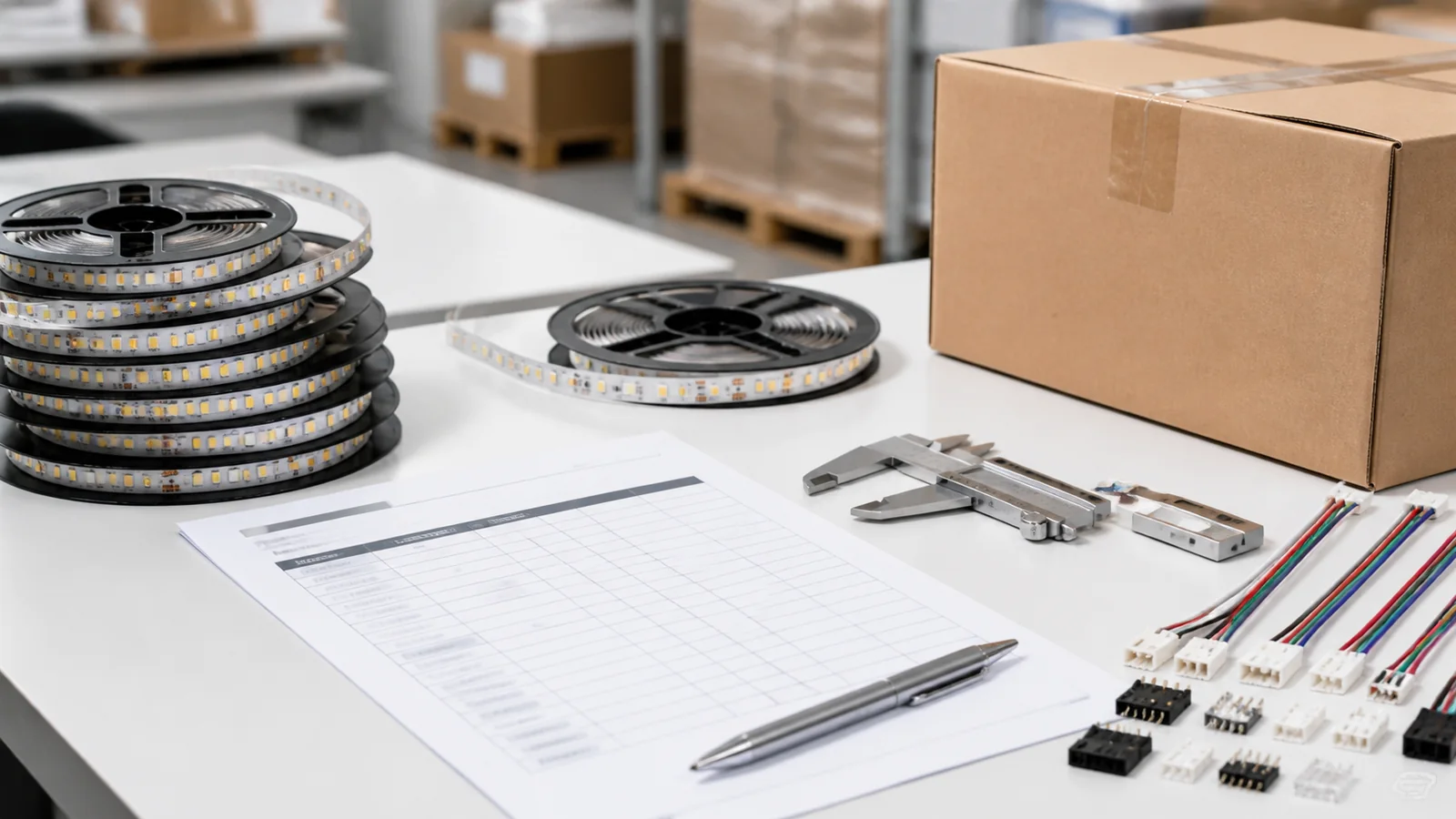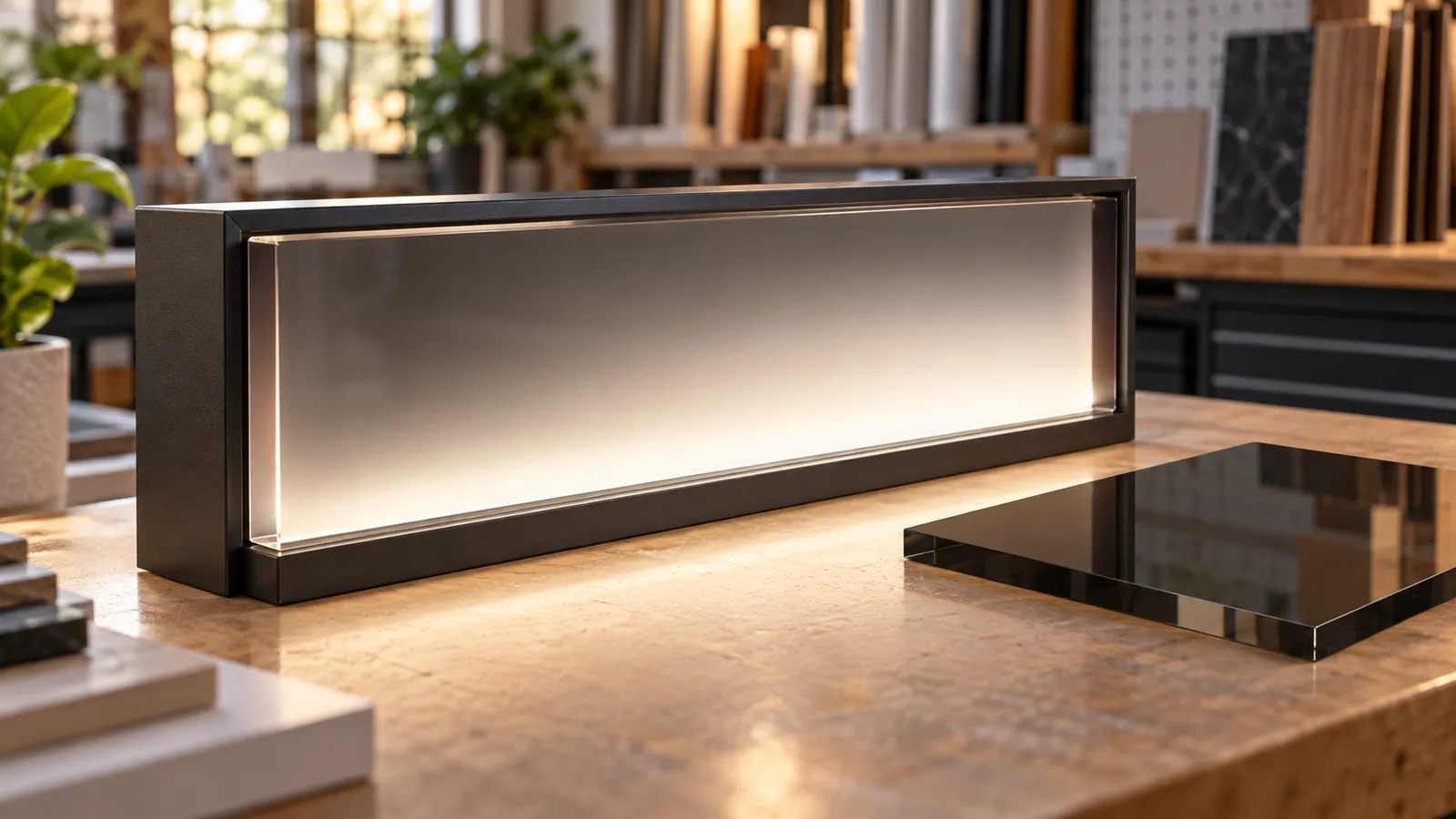
An LED strip can backlight a dark acrylic face if the selected sheet transmits enough visible light for the intended result. Ordinary opaque black sheet may block that light. Choose by the material’s exact grade and thickness, then approve a powered sample of the complete sign or panel. Increasing strip power will not turn an opaque face into a suitable diffuser.
For a distributor supplying a dark-front reception sign, the important distinction is between a face that looks black when unlit and a face that remains opaque when illuminated. A smoked transparent sheet is another construction: it may reveal the LEDs instead of diffusing them.
Get the sheet reference before choosing the strip
The PERSPEX design guide lists Black 962 with 0% visible transmission under its stated colored-sheet table conditions, while noting its infrared-transmitting property. The guide describes the figures as typical sample results, not a purchasing specification. Infrared transmission is not evidence that a white LED sign will be visible through the sheet. Confirm the current grade, thickness and material specification with the sheet supplier.
ACRYLITE LED color changing back lit Black/White is a purpose-made alternative described by its manufacturer as dark when unlit and light-transmitting when backlit. Its published transmission figure applies only to that material; it does not describe all black acrylic or the output of a finished sign. Identify the grade even when the quotation calls the sheet black. LEDStripStar does not claim to supply either of these sheets.
Request the grade code, thickness, visible transmission information, diffusion behavior and any printing or film layers. Include the finished surface and which side faces outward. If the supplier cannot identify the material, test a sample before choosing a bulk strip quantity.
| Material description | What remains to be checked | Purchasing consequence |
|---|---|---|
| Opaque black face | Visible transmission for its exact grade | Do not assume backlighting will illuminate the face |
| Smoked transparent face | Source visibility and diffusion | Plan a separate optical treatment if required |
| Dark-unlit backlighting grade | Transmission, thickness and finished appearance | Test the proposed strip and cavity together |
| Printed or film-covered face | Transmission through the completed layers | Approve the decorated panel, not bare sheet |
Build the sample around the actual cavity
Use the intended acrylic, cavity depth, lining, strip position and any additional diffuser. A small loose sheet held over a bare reel does not reproduce the edge shadows, joints or reflected light inside a sign housing. Select a representative section that includes a corner or divider where those details exist.
The catalog’s 8mm CRI80 COB family is a candidate for comparing a continuous-looking white source. Confirm the selected voltage and white variant. The listing also includes a blue option; it must not be treated as a white variant’s color-rendering specification. COB construction does not by itself guarantee a uniform panel.
First test at the intended drive condition and mounting arrangement. Look for visible lines, bright regions, dark borders and solder-joint shadows from the customer’s normal distance. Repeat in the ambient light in which the sign must work. A face that looks acceptable in a dark workshop may be difficult to read in a bright lobby.
Change one assembly variable at a time and record it. If source pattern is visible, compare source placement, spacing, cavity depth or a suitable diffuser before adding more power. The diffusion guide explains that optical problem. If the white appearance changes through the face, use the cover-material color guide and retain the actual sheet sample.
Do not estimate front-face brightness by multiplying bare-strip lumens by a sheet transmission percentage. That shortcut omits geometry, reflections, coverage and other layers, and does not establish luminance or uniformity. If a numerical brightness target is required, specify how the completed panel will be measured and have it evaluated accordingly.
Check the enclosure as well as the face
The enclosed assembly needs a suitable mounting and heat path, service access and a supply sized for the confirmed load. Do not run a wound reel at load or raise the voltage to compensate for a dark face. Keep operation within the strip, sheet and other components’ specified limits. Stop a sample test if overheating, odor or unstable operation appears.
For a thin housing, preserve enough room for wiring and heat management; there is no universal safe cavity depth. Have the fabricator confirm the construction on a drawing. A rendering cannot establish that it is safe to build. Use the commercial-lighting application page for the wider project context.
Record the approved sign assembly
Record the sheet reference and thickness, films or printing, cavity drawing, source layout, strip model and voltage, supply/control arrangement, operating scene and acceptable lit/unlit appearance. Include the viewing distance and ambient-light condition used for approval. A photograph helps document the build, but automatic camera exposure cannot establish a numeric brightness result.
Send those details through the quotation form. Standard products start at 500 meters and custom products at 2,000 meters. Availability of the proposed strip configuration must be confirmed; the enquiry does not imply that acrylic fabrication or a complete tested sign is included.
Catalog & Sourcing Note
This article is prepared from our current product catalog and B2B specification workflow. Electrical, waterproofing and installation requirements vary by model and market, so confirm the final specification and approved sample before ordering.
Discuss Your Specification