Yes, after the complete refrigerated assembly is checked
LED strip can light a refrigerated display or cold room, but the product must be approved for the actual operating and cleaning conditions. Ask for the permitted temperature range of the exact strip, driver, cable and seal. The website catalog does not publish a universal cold-room rating, so a buyer should not infer one from an IP code or product-family name.
Condensation is often more difficult than low air temperature. Moist air can enter when a door opens, collect around a cable entry or form during defrost and wash-down cycles. The installation detail must keep water away from electrical connections and allow the enclosure to drain as designed.
Cold-room failures usually start at an interface
The strip body, field cut, connector, cable entry, profile and driver create one system. A protected reel can still fail where the sheath is cut or where a cable passes from the cold zone into warmer air. Adhesive may also bond differently to a cold, damp or food-safe surface than it did on a room-temperature sample.
The IEC 60529 IP-code standard classifies enclosure protection against access, solid objects and water. It does not establish operating temperature, resistance to cleaning chemicals, food-contact suitability or the durability of an installer-made termination.
Low temperature can change the flexibility of cables, sheaths and sealants. Drivers and controllers may have different limits from the strip. Defrost heaters can create a local temperature well above the normal cabinet air reading.
Approve five parts against the same duty cycle
Define minimum and maximum temperatures at the mounting surface. The thermostat setting alone misses conditions during defrost, door opening and shutdown. Document humidity, condensation, wash-down pressure and cleaning chemicals as separate inputs.
Select the strip by voltage, power, CCT, CRI and required output through the diffuser. A DC24V IP68 SMD model is one protected construction in the current catalog, but its suitability for a specific cold display still requires written confirmation. The complete joint does not inherit the strip’s rating automatically.
Place the power supply where its own temperature, ventilation and access requirements can be met. Calculate voltage drop at the expected load and cable length. Use a profile and mounting method that can be cleaned and serviced without tearing the strip or trapping water.
Test the temperature cycle, not a five-minute bench sample
Build a section with the proposed strip, profile, diffuser, cable entry, connector and driver. Run it through the expected cooling, door-opening, defrost and cleaning sequence. Inspect for condensation, loss of adhesion, seal movement, flicker, color change and moisture around the joint. Measure supply voltage at the strip while cold and after the defrost cycle.
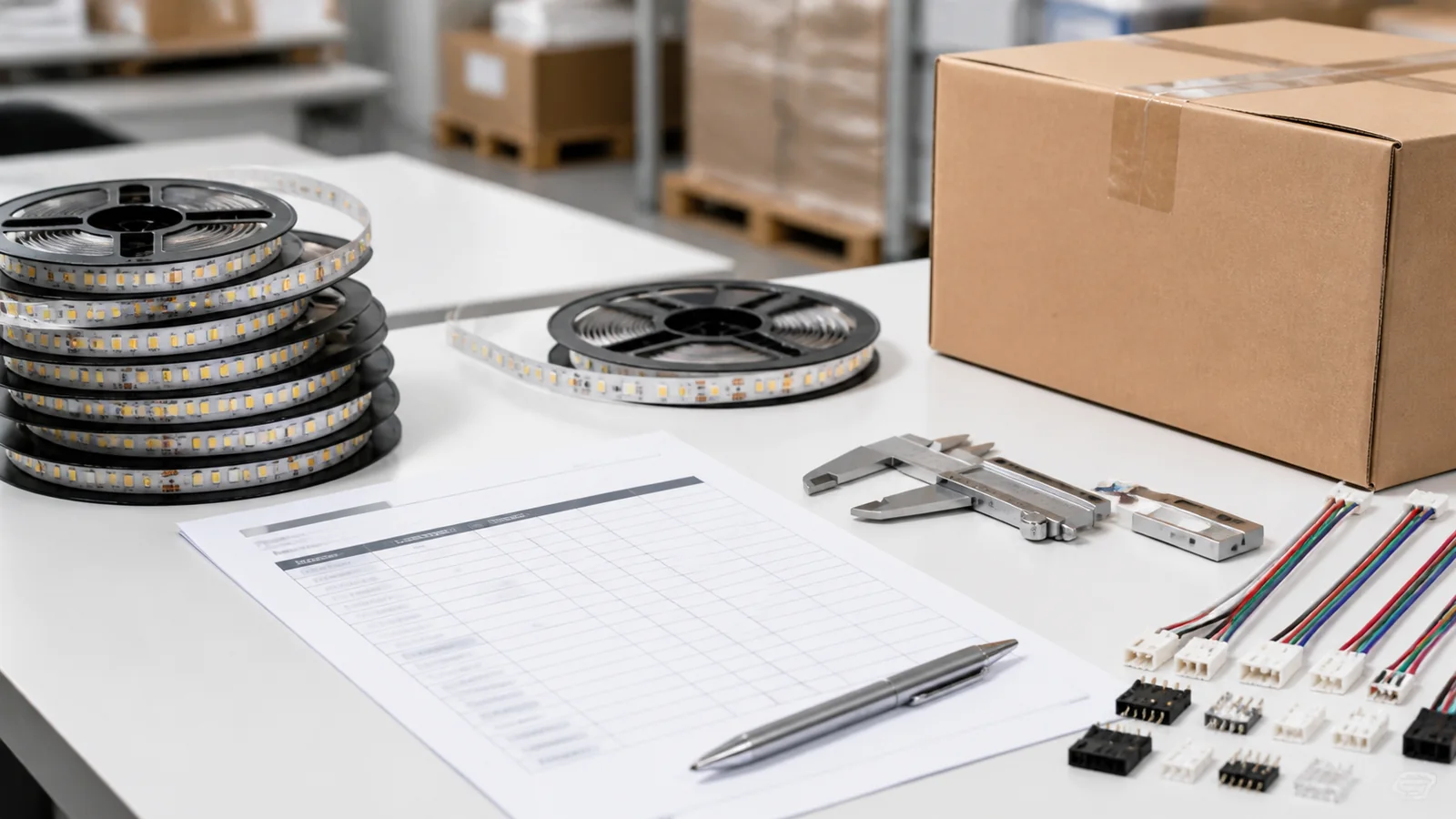
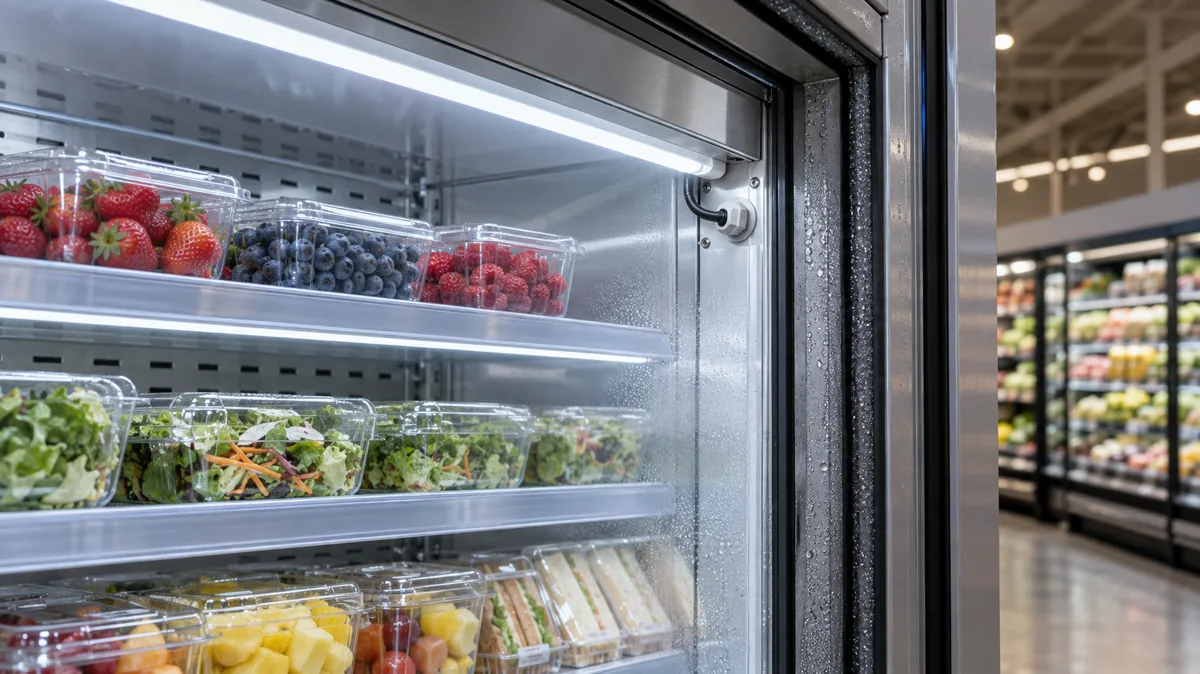
The header image is a concept illustration. It is not a test result or customer installation. Production approval should use the project’s real cabinet section and documented conditions.
Information a supplier needs before quoting
Send the cabinet or room drawing, minimum and maximum surface temperatures, daily operating cycle, defrost method, cleaning process, chemical exposure, installation length, feed locations, required light output and service-access plan. State whether the strip is inside a food display, behind glazing or exposed to direct wash-down.
Attach photographs of the cable path and termination area to the quotation request. We can identify catalog candidates and confirm available model information, while the refrigeration designer and installer approve the completed system.
Catalog & Sourcing Note
This article is prepared from our current product catalog and B2B specification workflow. Electrical, waterproofing and installation requirements vary by model and market, so confirm the final specification and approved sample before ordering.
Discuss Your Specification