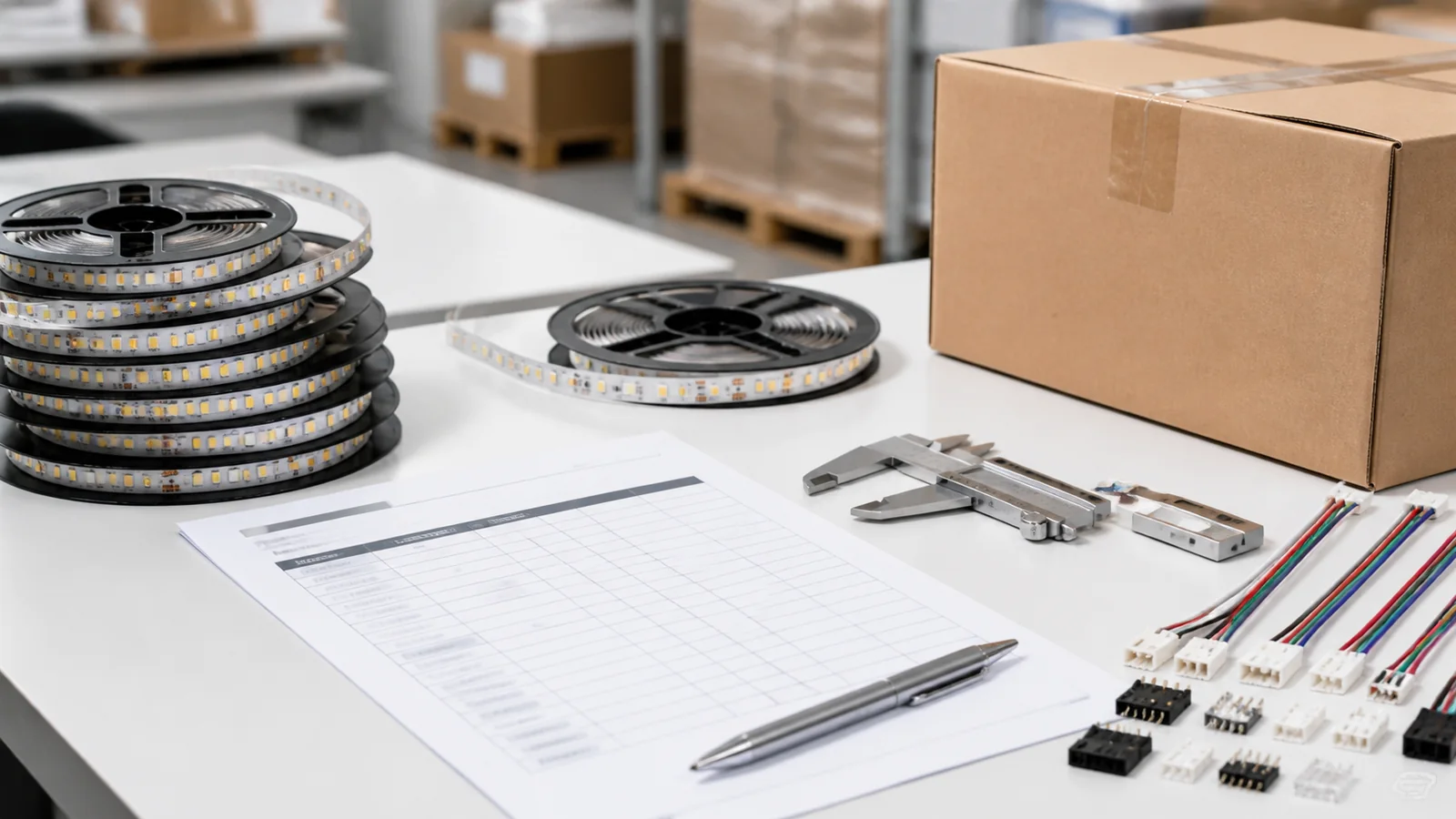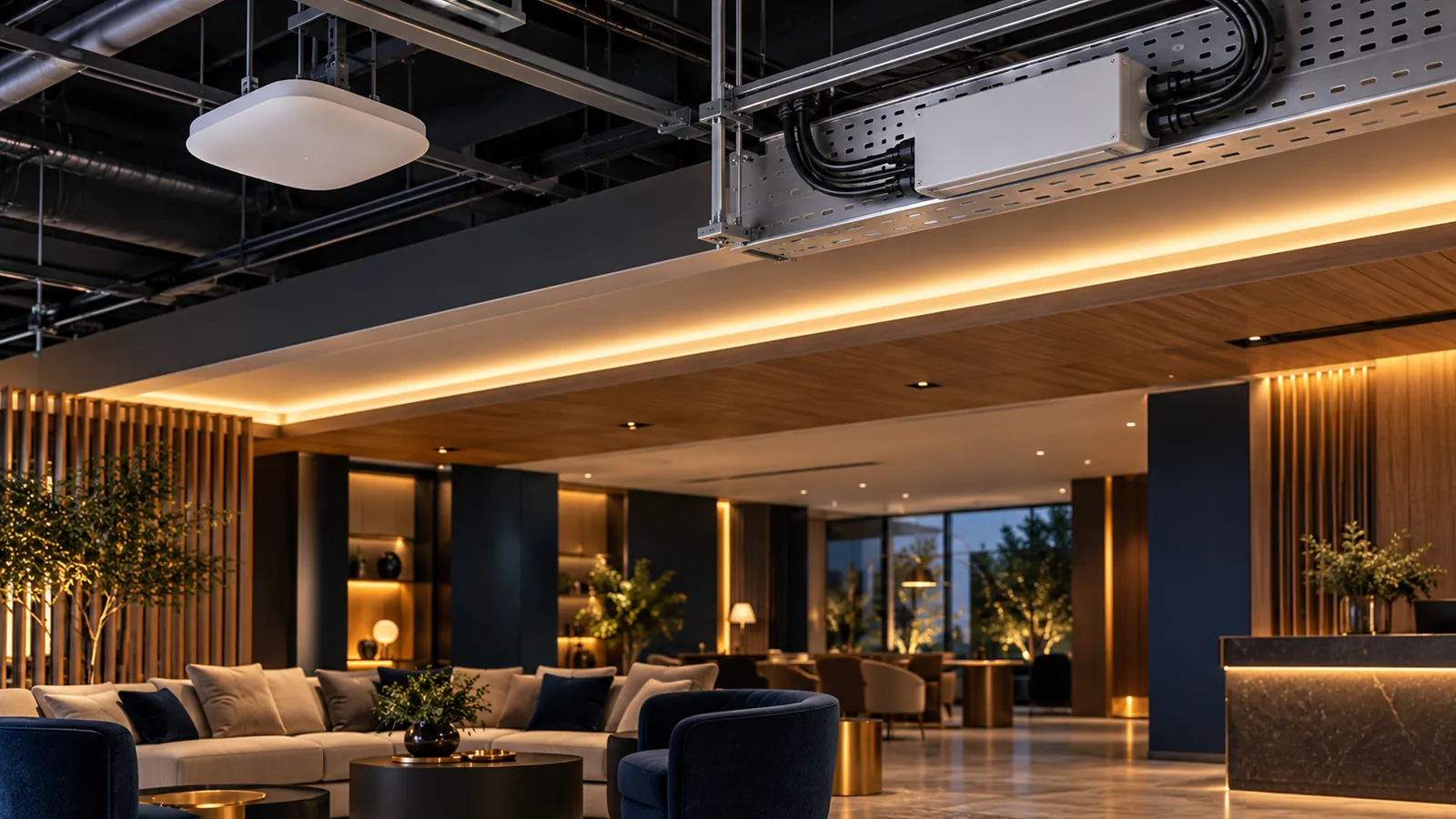
Electronics in an LED strip installation can contribute to wireless problems, but a dropout when the lights turn on does not prove radio interference. A controller may be losing power, its antenna may be obstructed, or the wider network may have a separate fault. Identify which connection fails before replacing the tape or power supply.
For UAE retail fit-outs and Saudi hotel projects, record the complete combination: power supply, controller, strip load, wiring arrangement and access-point location. A claim about an individual component cannot establish wireless performance in the finished joinery.
Identify what loses connection
First distinguish a lighting app showing a device offline from other devices losing Wi-Fi. If a phone and laptop continue working but the lighting controller restarts, investigate the controller and its supply. If several nearby devices are affected, involve the network team and compare local network access with internet access.
Ofcom’s Wi-Fi placement guidance notes that some electrical equipment can interfere with wireless signals and advises separation from the router. This supports checking equipment placement; it does not establish that a particular LED strip system is the cause of a site fault.
Compare the access point’s logs with any controller status information to distinguish disconnection from rebooting. Record the event time and the lighting command that preceded it. A repeatable correlation gives the technician a lead to investigate; it does not measure electromagnetic emissions.
Use the following observations to choose the next check. They indicate possible routes, not definitive causes.
| Observation | Question to investigate | Useful next comparison |
|---|---|---|
| Only the lighting controller disappears | Is it restarting or losing its network link? | Controller status and supply behavior at the same timestamp |
| Several wireless devices are affected | Is the local wireless connection or internet service failing? | Same clients and locations, lighting off and on |
| Fault appears after a metal access panel closes | Does the enclosure obstruct the antenna? | Same assembly with the permitted enclosure conditions compared |
| Fault appears at a specific dimming scene | Does that operating state change power or noise behavior? | Repeat the scene while recording both network and controller status |
| Fault follows a particular supply or controller | Is the substituted combination electrically suitable? | One documented, compatible substitution at a time |
Change one condition at a time
Keep the test client and access-point settings fixed while comparing lighting states. Record lights off, full output and the regularly used dimmed scenes. Repeat the sequence to see whether the event follows the same condition. Changing the router channel, controller and power supply together would leave the cause of any improvement unclear.
Have a competent technician check the controller’s input voltage and connections under the affected load. Match the voltage, polarity and current requirements before substituting equipment. A reset caused by an unsuitable supply is a different fault from a weak radio link. The controller selection guide explains why its network interface and tape output need separate specifications.
Review the antenna’s surroundings with the controller supplier. Espressif’s ESP32 hardware layout guidance discusses antenna clearance, enclosure effects and testing the finished product’s communication performance. It concerns those modules. Follow the actual controller manufacturer’s placement requirements; a clearance for an unrelated board cannot settle this installation detail.
Test the intended mounting position before closing joinery. If a permitted relocation improves communication, retain the observation and check that it also meets electrical, thermal and service requirements. Keep required protective enclosures and earth connections intact. Do not wrap electronics in improvised foil shielding or open a power supply to investigate noise.
MEAN WELL’s component power-supply EMI statement explains that the end-system arrangement and connected load influence electromagnetic behavior. Assess the actual installation on that basis. The statement does not demonstrate an emissions-test result for any finished LEDStripStar lighting assembly.
Record the combination that needs assessment
If the fault remains repeatable, give the controller, driver and network suppliers the same record. Include equipment model numbers, firmware where available, strip voltage and load, cable routing and enclosure photographs. State whether all wireless clients fail or only the lighting controller, and include the off/on and scene comparisons.
Ask the responsible suppliers what additional measurements are needed. A network signal-strength observation can help describe the link, but it does not identify the spectrum or source of electrical noise. A formal emissions investigation needs suitable equipment and a competent specialist.
For repeat installations, agree the equipment identities, placement and commissioning checks before purchasing the full quantity. Reassess substitutions that change the supply, controller, wiring or antenna surroundings. A stable bench demonstration does not settle communication inside the final cabinet.
For tape selection, send the voltage, circuit load and planned control arrangement. Define wireless performance and the separately selected controller’s installation requirements with the controls supplier before the joinery detail is finalized.
Catalog & Sourcing Note
This article is prepared from our current product catalog and B2B specification workflow. Electrical, waterproofing and installation requirements vary by model and market, so confirm the final specification and approved sample before ordering.
Discuss Your Specification