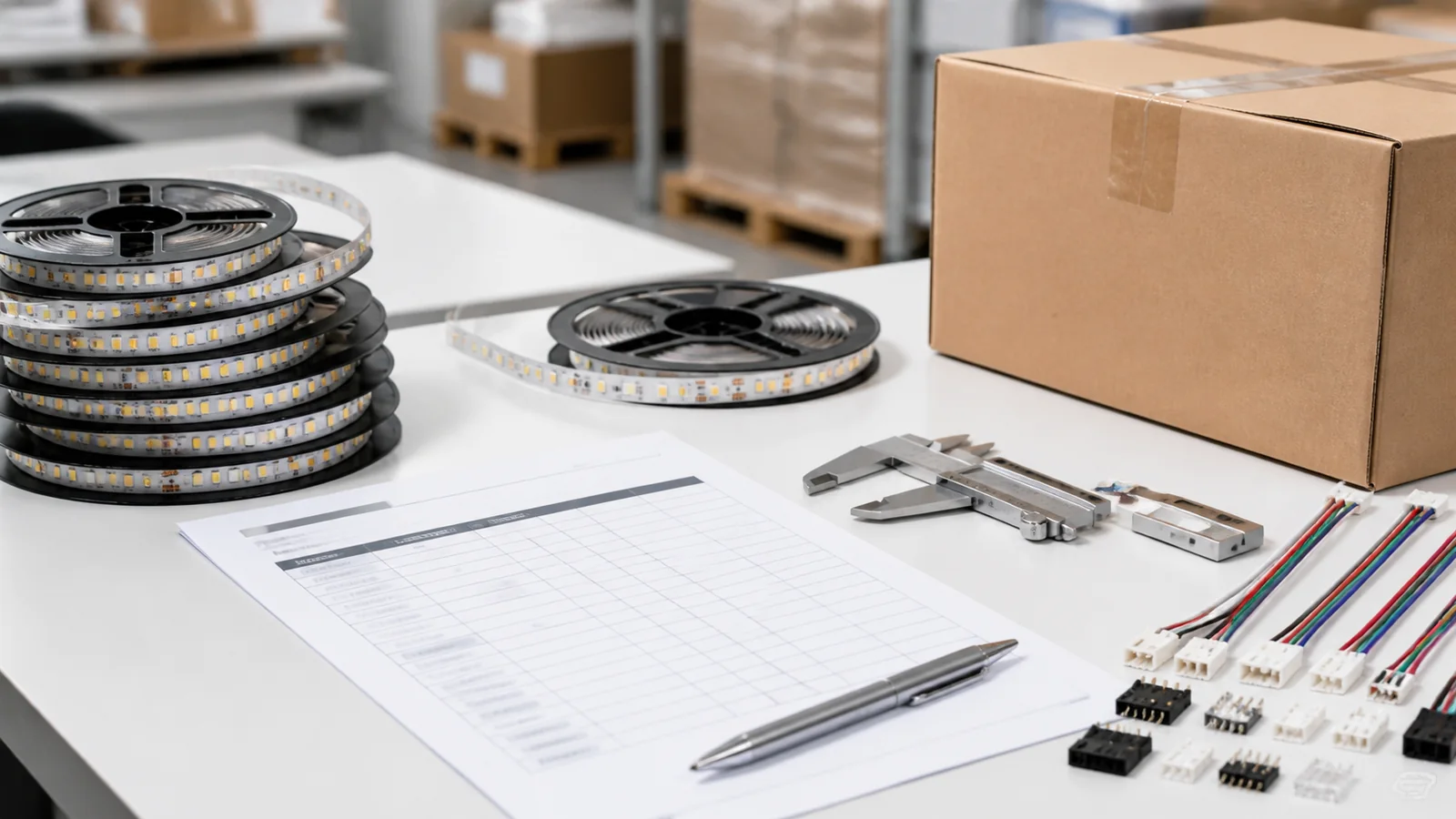
Ordinary blue-pumped white LEDs produce very little ultraviolet output. The term “LED strip” describes the product format and does not guarantee an emission spectrum; purpose-built UV LEDs also exist. For sensitive displays, identify the exact light source and check the evidence behind any UV claim. White appearance, a color-temperature label and an LED brand name cannot establish zero UV.
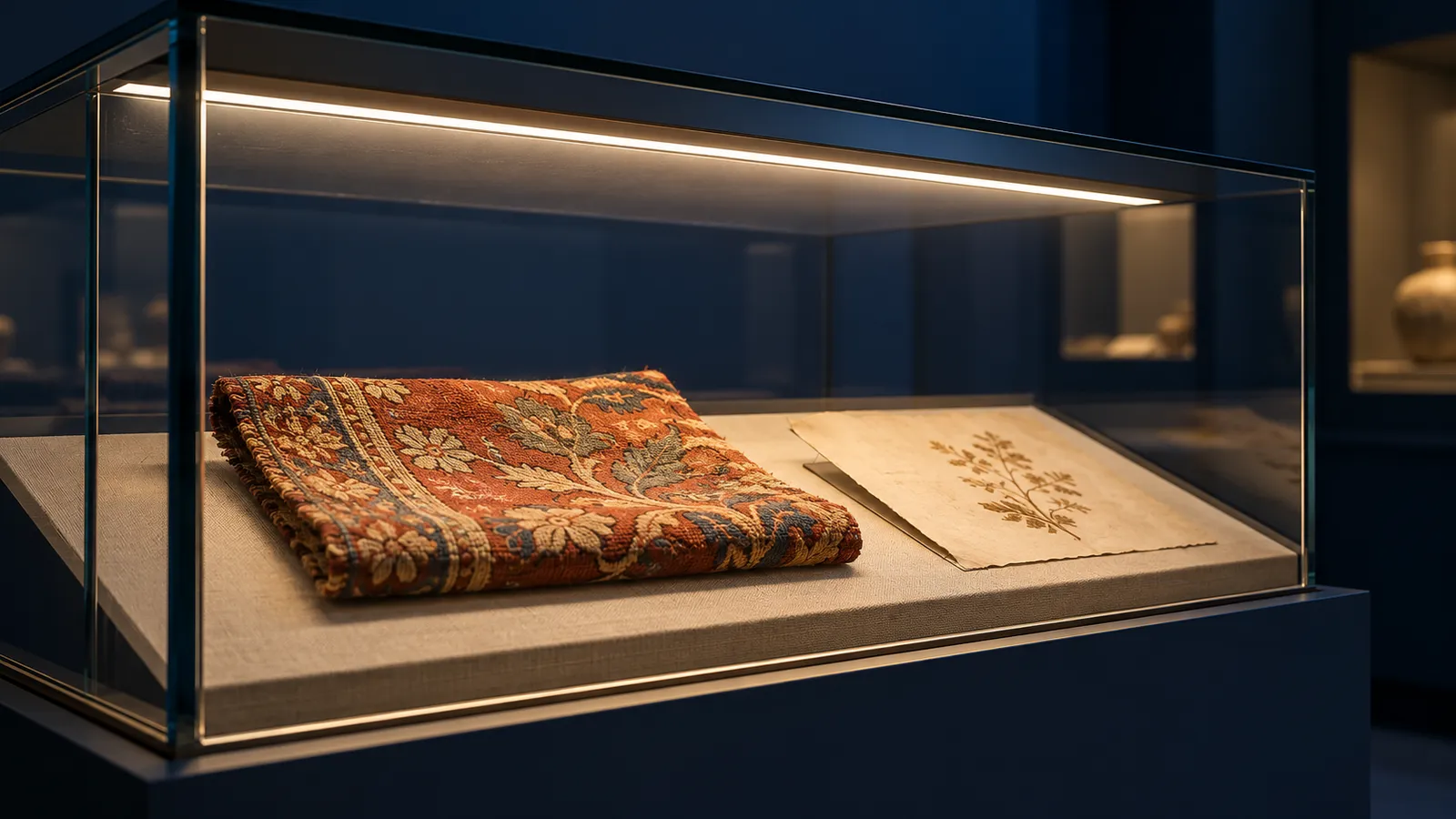
This distinction matters for UAE retail cabinets and Saudi exhibition displays containing printed packaging, textiles or paper. Visible light can still damage sensitive materials. A low-UV source alone cannot establish a safe display duration or guarantee that an object will retain its color.
Identify the light source before judging UV output
The Canadian Conservation Institute’s Technical Bulletin 36 distinguishes blue-pumped and violet-pumped white LEDs. Its discussion of UV measurements explains that blue-pumped LEDs have a steep fall in emission toward the UV region, while some other LED sources can have trace UV. Those findings concern the source types studied; they are not measurements of every commercial strip.
Dedicated UV emitters are a separate purchasing category. For example, Nichia’s UV product announcement describes UV-B emitters at 308nm and UV-A emitters at 330nm. LED technology can therefore produce UV as well as visible light. These examples do not describe the components of LEDStripStar’s white tape.
Check the ordered light source and intended function. A general white-light tape, a colored decorative strip and a UV curing product cannot share an emission claim merely because each uses LEDs. The relevant information is the exact emitter and its spectral behavior under the specified operating conditions.
A CRI value describes aspects of color rendering. A CCT value describes the appearance of white light. Neither is a UV measurement. Likewise, COB describes a construction approach; it does not supply a numerical UV limit for the finished tape.
Choose evidence that answers the display question
State what the buyer needs to establish before requesting information. A museum conservator’s spectral requirement differs from a retailer’s visual comparison of bottle labels. A supplier should identify what information exists for the exact variant and what remains unverified.
| Buyer question | Useful evidence | Limit of that evidence |
|---|---|---|
| Is this a white-light or UV product? | Exact model, emitter type and intended application | A category name does not quantify emissions |
| What wavelengths are emitted? | Spectral data with wavelength coverage and measurement conditions | A graph limited to the visible band cannot establish a UV limit |
| How much UV reaches the object? | Suitable calibrated measurement at the object plane | Instrument sensitivity and detection limit affect the result |
| How much visible light reaches it? | Illuminance measured on the displayed surface | Lux does not measure ultraviolet radiation |
| Will the material fade? | Material-specific exposure assessment | Low UV and high CRI do not guarantee color permanence |
CCI also cautions that common museum UV meters and some portable instruments can give misleading readings at these very low emission levels. Have a qualified lighting or conservation specialist select the method. Record its wavelength range, detection limit, distance and operating conditions. A result below detection remains bounded by that method’s limits.
Do not use a phone photograph, visible glow or a basic lux reading as proof of UV output. A useful record links the exact tested assembly to the question being asked. Recheck the assessment if the emitter, cover or operating arrangement changes.
LEDStripStar’s COB tape catalog can help narrow the electrical and white-light options. Catalog CCT and CRI entries do not establish a measured UV value. Where a project requires a specific emission limit, establish the missing evidence and acceptance method before selecting the product.
Control visible-light exposure as well
CCI’s guidance on light, ultraviolet and infrared explains that visible light can fade colors and that reducing exposure is central to protecting sensitive objects. UV control addresses only part of the deterioration problem. Different materials have different sensitivities.
Measure illuminance at the object surface and record the hours of exposure. Illuminance multiplied by time gives a lux-hour exposure record for managing the agreed lighting schedule. The record cannot predict every object’s remaining life. Obtain limits from the collection owner or the relevant material specialist.
Assess daylight separately. A display beside a window receives a combination of sources, so a lamp’s data cannot describe the whole exposure. Keep unnecessary lighting off when the display is closed, and use dimming or timed operation where the owner accepts it. Review the actual object rather than selecting a universally “safe” CCT.
Check heat and reflections during the same mock-up. White LED lighting still produces heat in its assembly, and a visually comfortable display may need a shielded profile or a different mounting position. The display-cabinet selection guide covers those practical choices.
For a project inquiry, send the object type and display arrangement, together with any owner-defined spectral or exposure requirement. Identify which evidence is available and which must be established before the lighting is approved for that use.
Catalog & Sourcing Note
This article is prepared from our current product catalog and B2B specification workflow. Electrical, waterproofing and installation requirements vary by model and market, so confirm the final specification and approved sample before ordering.
Discuss Your Specification