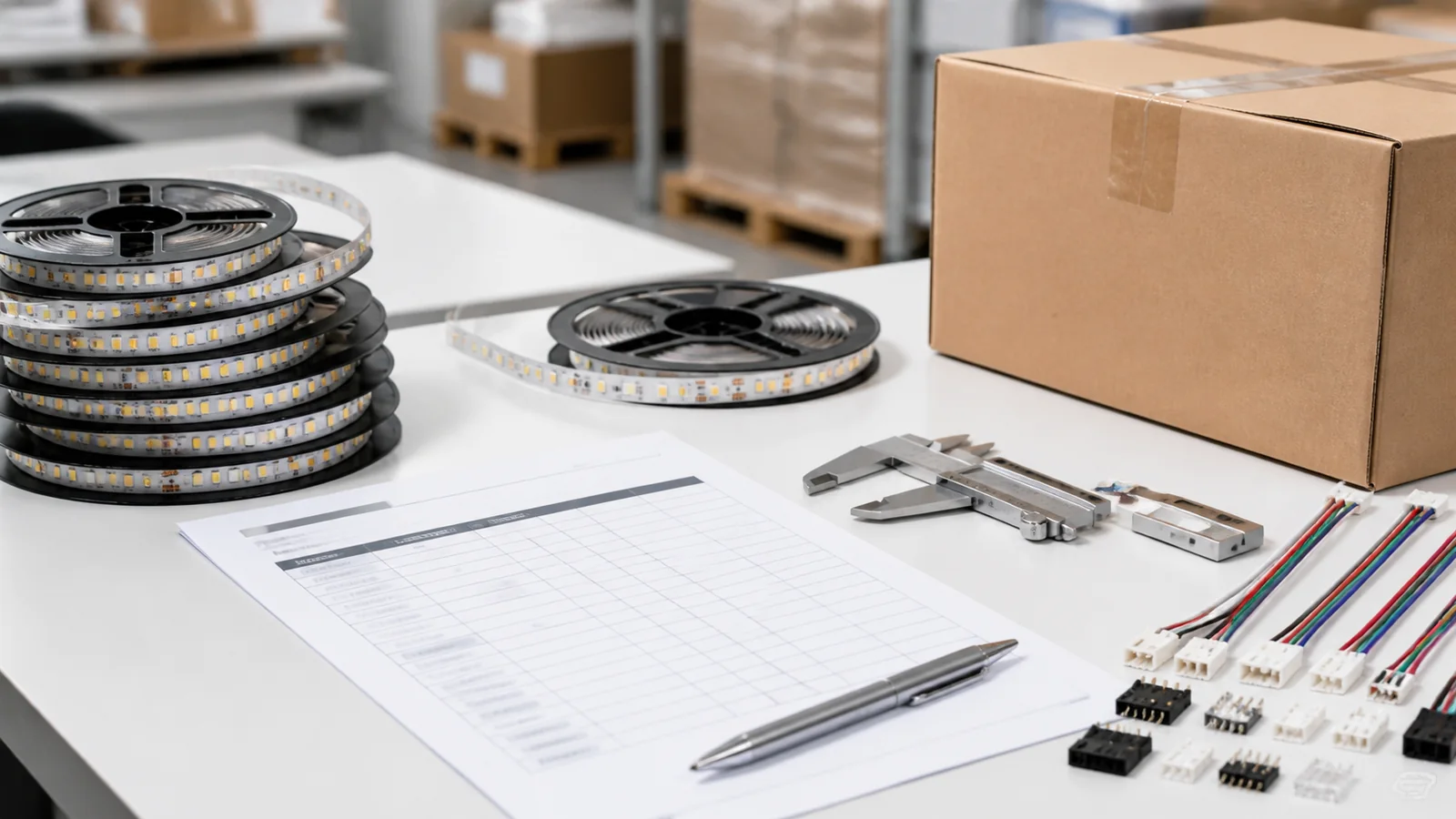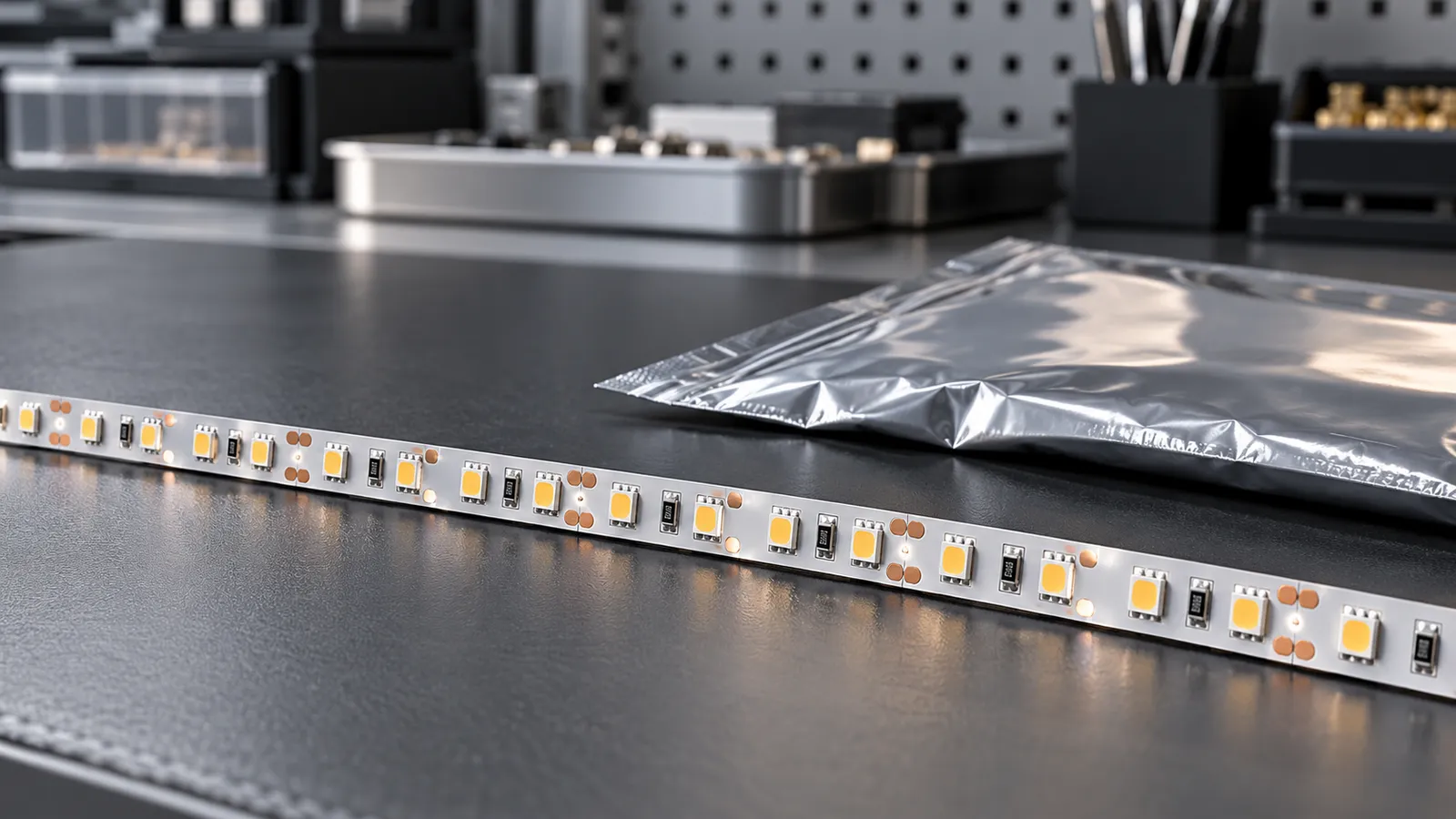
LED strips need handling precautions appropriate to their components and assembly process. When unpacking, cutting or soldering tape, use the strip supplier’s handling instructions and an established electrostatic discharge (ESD) control procedure. A protective coating or an apparently successful light-up does not establish immunity to static damage.
Ask what protection the specific tape requires between receipt and installation. Warehouse staff, assembly operators and the commissioning team handle it at different stages. Assign responsibility for each handover so an opened reel keeps its identification and protective packing.
Separate static damage from other faults
The ams-OSRAM Fundamentals of LED handling application note describes friction during transport and processing as a source of electrostatic charge. It explains that discharge can damage LEDs immediately or lead to later failure, and that a person may not feel the event.
That document concerns LED components. It supports the need for controlled handling, but its component limits and packing rules should not be copied as ratings for an assembled LEDStripStar tape. Obtain the instructions for the actual strip construction, including its exposed contacts and any attached electronics.
The same application note distinguishes electrical overstress from ESD. Excess operating current is another damage mechanism. Mechanical damage, incorrect supply connections and soldering faults also need investigation when a section stops working. A failed LED alone cannot identify static discharge as the cause.
Control the assembly workflow
| Stage | Practical control to agree | Record to retain |
|---|---|---|
| Receiving | Check the specified packing and reel identity | Model, lot and packing condition |
| Unpacking | Open material in the designated handling area | Reel issued to the assembly job |
| Cutting and soldering | Follow the approved workstation and tool procedure | Operator, equipment checks and assembly identity |
| Moving assemblies | Use the agreed protective containers | Lot and destination |
| Returning unused tape | Preserve identification and specified protection | Remaining length and handling status |
Have the workshop’s responsible person define the workstation controls, personnel protection and checks appropriate to its ESD procedure. Equipment and protective items need to work together; buying a mat or wearing gloves by itself does not establish a controlled process.
Do not improvise a wrist-strap connection to a live circuit, supply terminal or unverified earth point. Personnel grounding belongs to a properly designed workstation procedure. Assembly handling and energized electrical testing should have separate instructions.
Keep tape supported while working and handle it without pressing on LED surfaces. Use the permitted soldering method and avoid pulling assembled leads through the joints. These mechanical precautions address a different risk from static protection and remain necessary at an ESD workstation.
Specify protection and investigate failures
Before ordering workshop quantities, ask for the handling requirements for the tape and any supplied controller. Agree how reels and finished assemblies will be packed during local transport. Packaging chosen for physical protection should not automatically be treated as providing electrostatic shielding.
Use the storage guide for warehouse conditions and identification. The assembly procedure should add what happens after opening: where material is processed, which tools are used and how partly completed sections move between workstations.
If failures appear, preserve the affected assembly and its lot identity. Record when the fault was first seen, the circuit used, the handling steps and any visible damage. Compare that record with equipment settings and inspection results before assigning a cause. A later failure is not proof that an ESD event occurred.
For LED strip sourcing, include cutting, soldering and transport requirements in the quotation brief. Confirm the handling method before the assembly shop commits to a repeated process; unresolved protection requirements should remain visible in the purchase file.
Catalog & Sourcing Note
This article is prepared from our current product catalog and B2B specification workflow. Electrical, waterproofing and installation requirements vary by model and market, so confirm the final specification and approved sample before ordering.
Discuss Your Specification