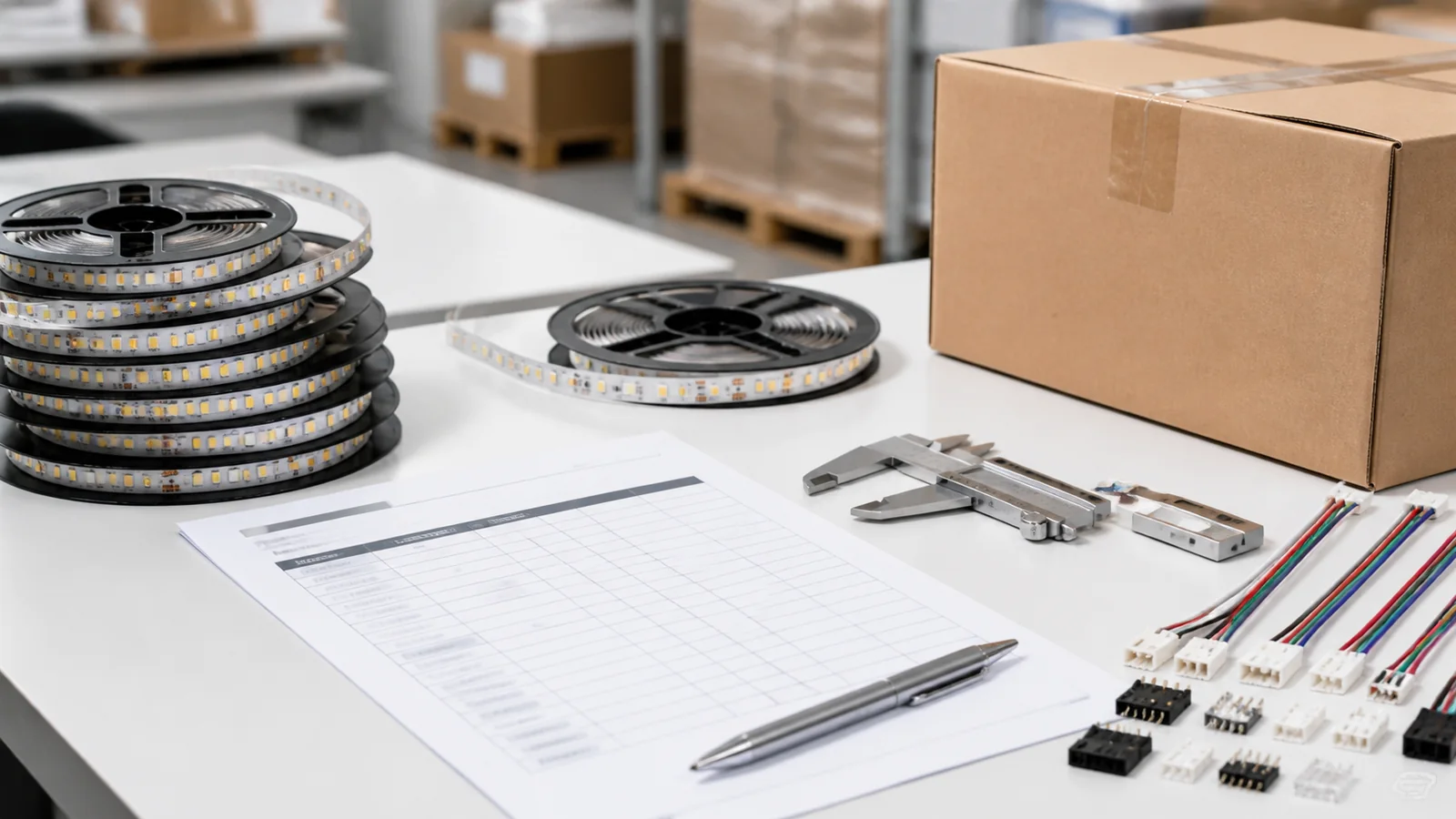
Keep reels identified, sealed, supported and within the model's storage limits
Store LED strip reels in their original bags and cartons until they are needed. Keep them away from water, condensation, direct sunlight, excessive heat, dust and crushing loads. Preserve the product label and production lot on every reel, including partly used reels returned from site.
There is no universal temperature, humidity or shelf-life limit for every flexible strip, adhesive backing and encapsulation. Request the storage instructions for the exact model and record them in the purchase file. Warehouse staff should be able to identify stock that has exceeded an agreed limit or lost its protective packing.
Storage conditions affect the LEDs, flexible PCB, solder joints, adhesive liner, silicone or coating, connectors, reel shape and labels needed for traceability.
Inspect the shipment before putting it into stock
Hold new cartons in a receiving area until staff have checked their identity and condition. Compare the purchase order with the packing list, carton labels and reel labels. Separate any shipment that contains mixed or unclear model codes.
Check for:
- wet, crushed, punctured or resealed cartons;
- reels that have slipped off their hubs or become tightly kinked;
- broken bags, missing labels or loose desiccant where one was specified;
- corrosion, discoloration or visible contamination at exposed contacts;
- reels mixed by voltage, CCT, color, PCB width or lot;
- quantity differences between labels, packing list and physical count.
Photograph the carton and reel identity before discarding damaged packing. If water or impact damage is suspected, quarantine the affected cartons and agree on an inspection method before powering or cutting the strips.
The pre-shipment inspection guide covers sampling before dispatch. Receiving inspection confirms that the shipped identity and condition survived transport.
Control the warehouse environment and stock location
Use a clean, dry storage area with stable conditions suitable for the ordered model. Do not place cartons against a damp wall, below a leaking air-conditioning unit or where direct sun heats one side of a pallet. Keep them off the floor where cleaning water, condensation and handling equipment can cause damage.
Record the manufacturer’s model-specific limits when temperature or humidity control matters. A limit published for a bare LED package cannot be copied to a finished strip assembly. Cree LED’s SMD LED handling document, for example, explains why LED components use moisture-barrier bags, desiccants and humidity indicators. It applies to the listed LED packages and manufacturing processes, not automatically to complete reels stored for installation.
Organize stock by product and lot. A practical location label includes:
- buyer or supplier model code;
- voltage and color or CCT;
- lot code;
- reel length and number of reels;
- receipt date and planned issue date;
- inspection or quarantine status.
Use first-in, first-out when lots are interchangeable and no project allocation overrides it. A hotel mock-up lot, for example, may need to remain reserved for the approved rooms even after newer general stock arrives.
Protect the flexible circuit while reels are moved
Carry reels by their hub or supported sides. Do not lift a reel by the loose strip end, throw it into a bin or stack weight on an unsupported flange. Keep protective caps and bags in place until the work area is ready.
LEDVANCE’s LED strip installation guidance warns against folding, twisting, improper bending and touching LEDs on unprotected strips. It also calls for ESD precautions and cutting only at designated points. Apply the handling instructions issued for the purchased model because bend radius and construction vary.
Do not pull a strip from a stationary reel across a rough floor or sharp carton edge. Let the reel rotate on a clean support while the installer pays out the required length. Stop if the strip binds, because pulling harder can stretch the PCB or damage components without leaving an obvious mark.
Keep connectors, leads and end seals from being crushed between turns. Protected strips can be heavier and may need larger reel hubs or different stacking limits than an uncoated indoor strip.
Control opened, partly used and cut reels
An opened reel needs the same identity as a full reel. Keep the original label or apply a controlled replacement label showing model, voltage, color or CCT, lot and remaining quantity. Do not combine short pieces from different lots under one unqualified label.
Before returning material to storage:
- isolate it from site dust, metal swarf, plaster and wet sealant;
- inspect the loose end for a torn PCB, exposed copper or damaged coating;
- protect the cut end as required for that construction;
- rewind without tight bends, twists or trapped connectors;
- place the reel in a suitable clean bag and carton;
- update the remaining length and issue record.
For protected strip, an open cut end may have different storage needs from the factory-finished end. LEDVANCE’s IP67 strip product information states that cut strips should be stored with end caps fitted for that product family. Use the method specified for the exact ordered construction.
Adhesive liners also need protection. Dust, oil and repeated peeling can damage the backing before installation. Keep the liner intact and avoid placing samples adhesive-side down on desks or drawings.
Issue stock by room, circuit or work package
Give installers only the reels assigned to the current work package. The issue sheet should connect reel or lot codes to the project area, especially when several CCTs or voltages share similar-looking reels.
Before release, verify:
- model and revision match the approved submittal or sample;
- the planned driver voltage matches the strip;
- the reel has no unresolved quarantine status;
- profiles, connectors and mounting accessories fit the same construction;
- site storage is dry, secure and away from other trades;
- installation instructions travel with the material.
Keep a retained reference when the inspection plan calls for one. The batch traceability guide explains how reel, carton and inspection records can be linked. The packaging specification guide helps define those labels before production.
Storage requirements to settle before ordering
- exact model and project item code;
- reel length, reel construction and maximum packing stack;
- bag, desiccant or humidity indicator requirement where applicable;
- reel, bag and carton label fields;
- model-specific storage limits and shelf-life statement;
- handling and bend restrictions;
- treatment of opened and cut ends;
- lot-mixing and project-allocation rules;
- receiving inspection and quarantine process;
- retained sample and complaint-traceability period.
Send the expected storage period, delivery stages and label requirements through the wholesale quotation form. For private-label orders, confirm the buyer item number and production lot remain readable after the retail label is applied.
The header image is an editorial warehouse concept. It does not depict a real shipment, warehouse or customer inventory.
Catalog & Sourcing Note
This article is prepared from our current product catalog and B2B specification workflow. Electrical, waterproofing and installation requirements vary by model and market, so confirm the final specification and approved sample before ordering.
Discuss Your Specification