Use a cross-section or copper-weight test for verification
A handheld caliper cannot verify copper thickness on a finished LED strip. It measures the total flexible PCB, including copper, dielectric, adhesive, solder mask and any cover layers. For a disputed or critical requirement, use a prepared cross-section examined under a measuring microscope, or an agreed copper-by-weight method on suitable material.
Write the requirement into the approved specification before production. Terms such as “thick PCB” or “high copper” give incoming inspection nothing objective to check. State the nominal copper weight or thickness, the layer being specified, the test method, sample quantity and acceptance rule.
What 1 oz, 2 oz and 3 oz mean
PCB copper is commonly described by the mass of copper spread over one square foot. One ounce per square foot corresponds to a theoretical average thickness of about 34.8 micrometers before normal manufacturing variation. Two-ounce and three-ounce constructions are approximately two and three times that nominal value.
The copper-weight label describes one part of the finished board. Etching removes copper to form tracks, while some constructions add plated copper. Track width, copper thickness and run length affect voltage drop alongside current and cooling. Approve the electrical performance of the finished strip together with the PCB material callout.
Ask which copper layer the supplier is describing. A single-sided strip, double-sided strip and multi-layer flexible circuit do not have the same stack-up. Request a simple stack-up drawing showing copper, dielectric and overall PCB thickness. The current product pages list PCB width and electrical parameters by model; copper construction still needs order-specific confirmation.
Choose a method that answers the actual question
Supplier material record
A copper-clad laminate record or incoming-material document can show what material entered production. It is useful for routine lot control, provided its lot identity connects to the finished strip. It does not independently measure the reels received by the buyer.
Metallographic cross-section
A laboratory embeds a small PCB piece, grinds and polishes the edge, then measures the copper layer under a calibrated microscope. IPC lists manual microsectioning in IPC-TM-650 test methods, including method 2.1.1, and dimensional inspections using microsections. The buyer and laboratory should agree where to section and how many readings to take because a single photograph can miss variation across the strip.
Copper by weight
IPC also lists TM 2.2.12A for thickness of copper by weight. This approach needs a suitable specimen and controlled preparation. It is less convenient as an incoming check on an assembled reel because components, solder, mask and adhesive interfere with a simple weighing exercise.
Electrical comparison
Resistance or voltage-drop measurements help verify finished performance, but they do not isolate copper thickness. Track width, copper resistivity, length, temperature, solder joints and probe contact all influence the result. Use electrical measurements to confirm the approved strip behavior, not as the only proof of a specific copper weight.
Keep a sample trail from approval to shipment
Test the approved sample first so the buyer and supplier know what result the chosen method produces. Record the exact strip model, PCB revision, sample location and laboratory method. Retain part of that sample for comparison.
For production, take specimens from identified reels and cartons. An untraceable loose piece cannot establish which production stock was tested. Set the sampling quantity from the order size, number of PCB lots and business risk. If several PCB material lots are used, decide whether each lot needs a test or whether documented lot linkage is enough.
Cross-sectioning is destructive. Agree who selects the reels, who seals the samples, which laboratory performs the work and what happens to the opened reels. For routine orders, buyers often combine supplier material records with dimensional and electrical checks, then reserve laboratory sectioning for first orders, changes or disputes.
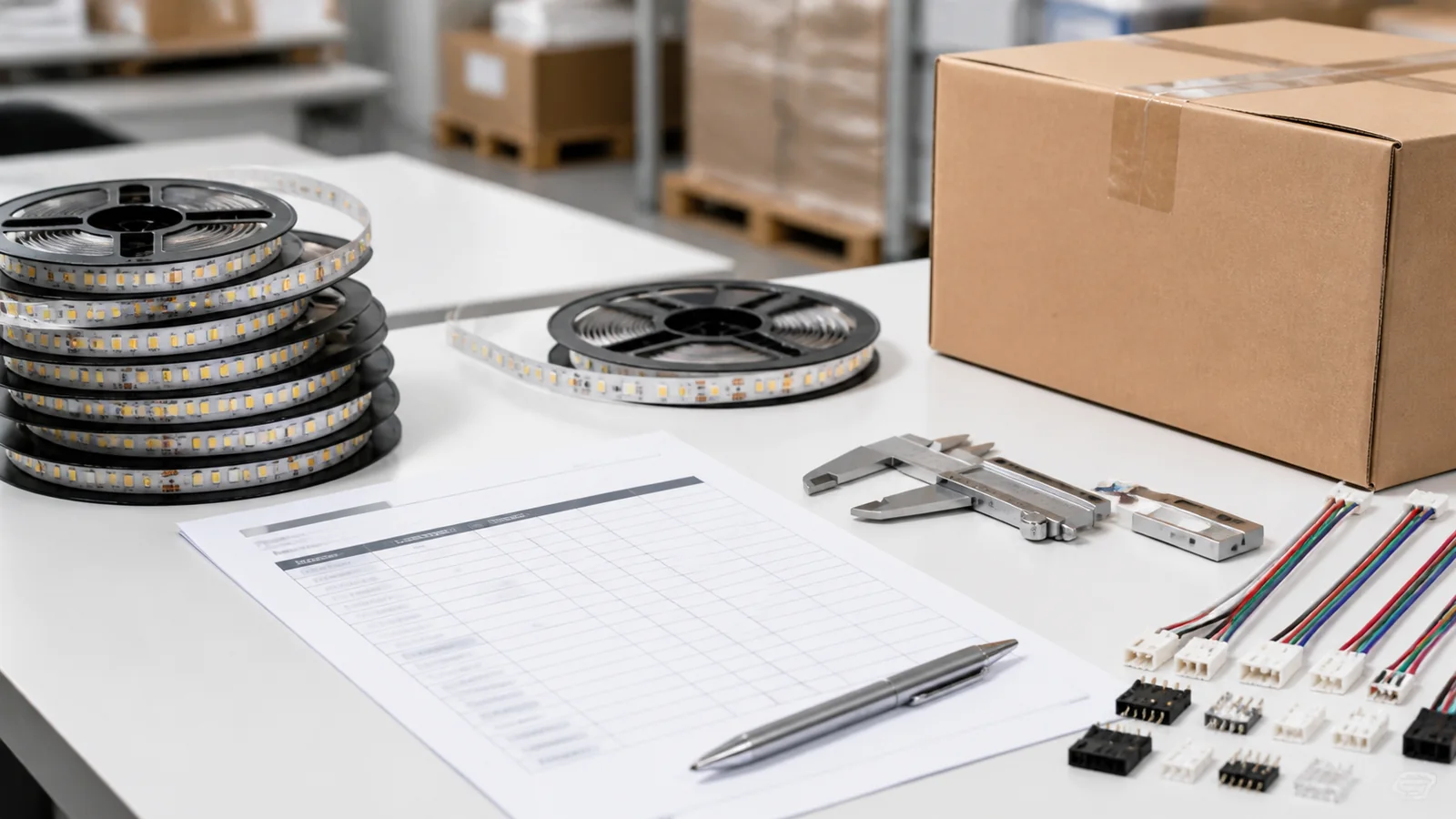
The header image illustrates a laboratory workflow. It is not an LEDStripStar test report or evidence for a specific product lot.
Put these points on the purchase order
Name the exact strip model and PCB revision. State nominal copper weight or thickness, layer count, PCB width, overall PCB thickness if needed, voltage, power per meter and maximum approved run. Add the verification method, sample locations, number of readings, report format and acceptance limits agreed with the supplier.
Include change control. A different PCB factory, copper construction, track layout or dielectric can affect performance even when the commercial model name stays the same. Require written approval before one of those defined items changes.
Send the requirement with drawings through the quotation page. LEDStripStar can confirm the available construction for the selected model and quote against the written requirement. Any third-party testing must be defined and agreed before the order.
Catalog & Sourcing Note
This article is prepared from our current product catalog and B2B specification workflow. Electrical, waterproofing and installation requirements vary by model and market, so confirm the final specification and approved sample before ordering.
Discuss Your Specification