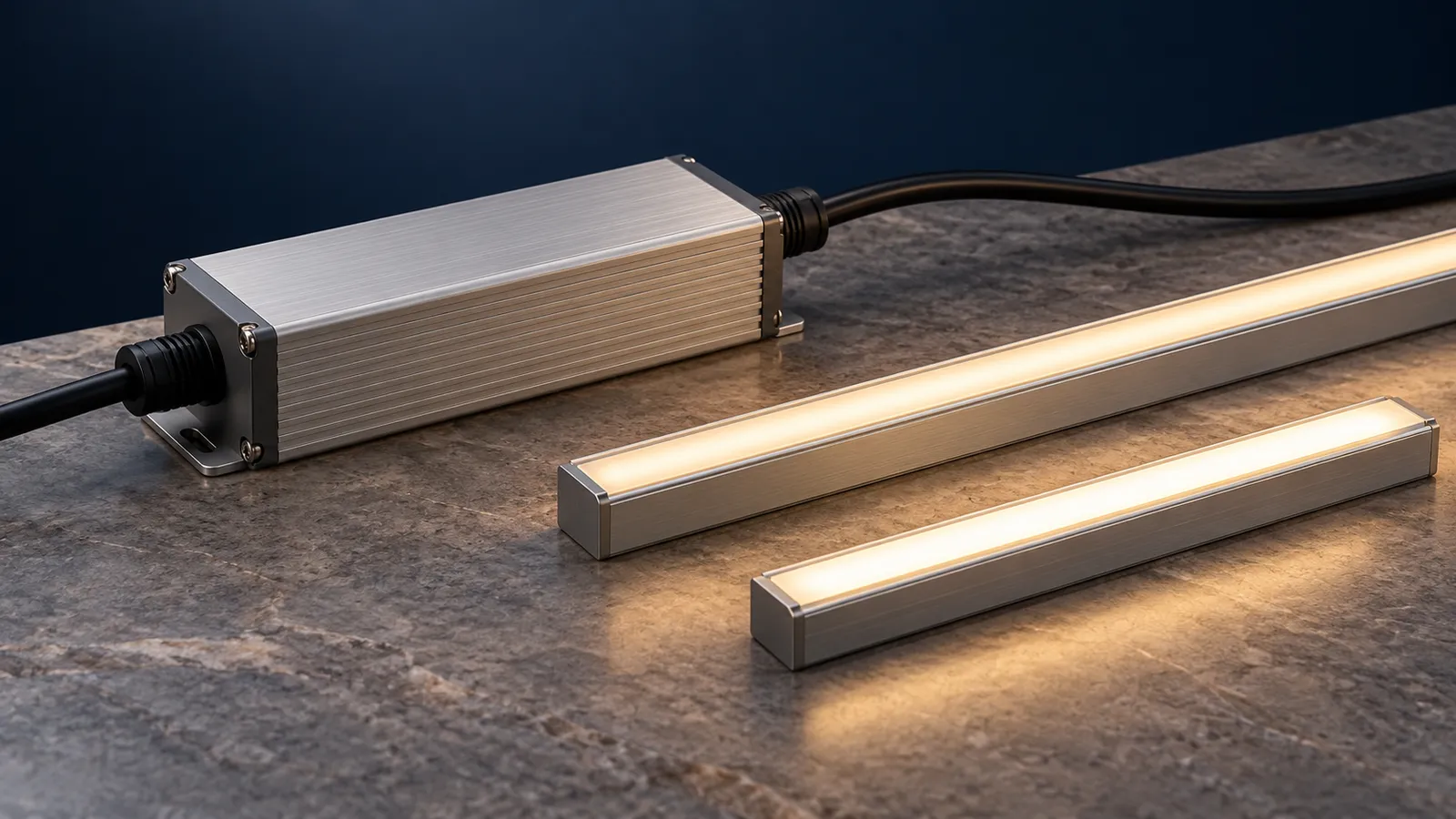
There is no universal minimum-load percentage for every LED strip power supply. Check the exact model’s output-current range, operating notes and dimming requirements. Then check any separate dimmer or controller. A supply that can regulate at a small load does not by itself establish the lowest stable brightness of the complete lighting system.
For a short accent circuit in a UAE shop or small independent zones in a Saudi hotel, put the smallest connected load in the driver-selection brief. Specify the lowest required scene separately so both conditions can be checked.
Separate output load, dimmer load and dimming level
MEAN WELL’s FAQ on minimum-load requirements explains that some of its multi-output supplies require a minimum load on each output for voltage regulation. This is model-specific information. It does not mean every single-output LED supply needs the same minimum, or that every supply can operate with no load.
Read the current range and its footnotes for the selected voltage variant. If the datasheet leaves low-load operation unclear, ask the manufacturer to define the permitted conditions. Do not infer the answer from the enclosure’s wattage label.
| Requirement | Where it applies | What the buyer needs |
|---|---|---|
| Supply output minimum load | Load connected to the power supply | Exact output range and any regulation conditions |
| AC dimmer minimum connected load | Dimmer and its connected driver combination | Compatibility information for the exact equipment pairing |
| Minimum stable dimming level | Complete driver, controller and strip | Demonstration at the required scene and on restart |
| Maximum reachable load | Highest permitted operating state | Adequate supply capacity with required derating |
| Multi-output loading | Each output of a multi-output supply | Individual rail requirements and combined-load restrictions |
Lutron’s Application Note 487 explains why LED minimum-load behavior depends on the specific source and dimming control. It also warns against applying traditional incandescent load ratings directly to LEDs. Its lamp examples are not numerical limits for a constant-voltage strip driver; they show why the exact pairing matters.
On a constant-voltage tape circuit, a controller may dim by switching its output rapidly. The supply then sees a changing load. A displayed brightness percentage is not enough information to establish the supply’s instantaneous load or its behavior during startup. Confirm support for the chosen control method with the equipment suppliers.
Check the smallest circuit and the required scenes
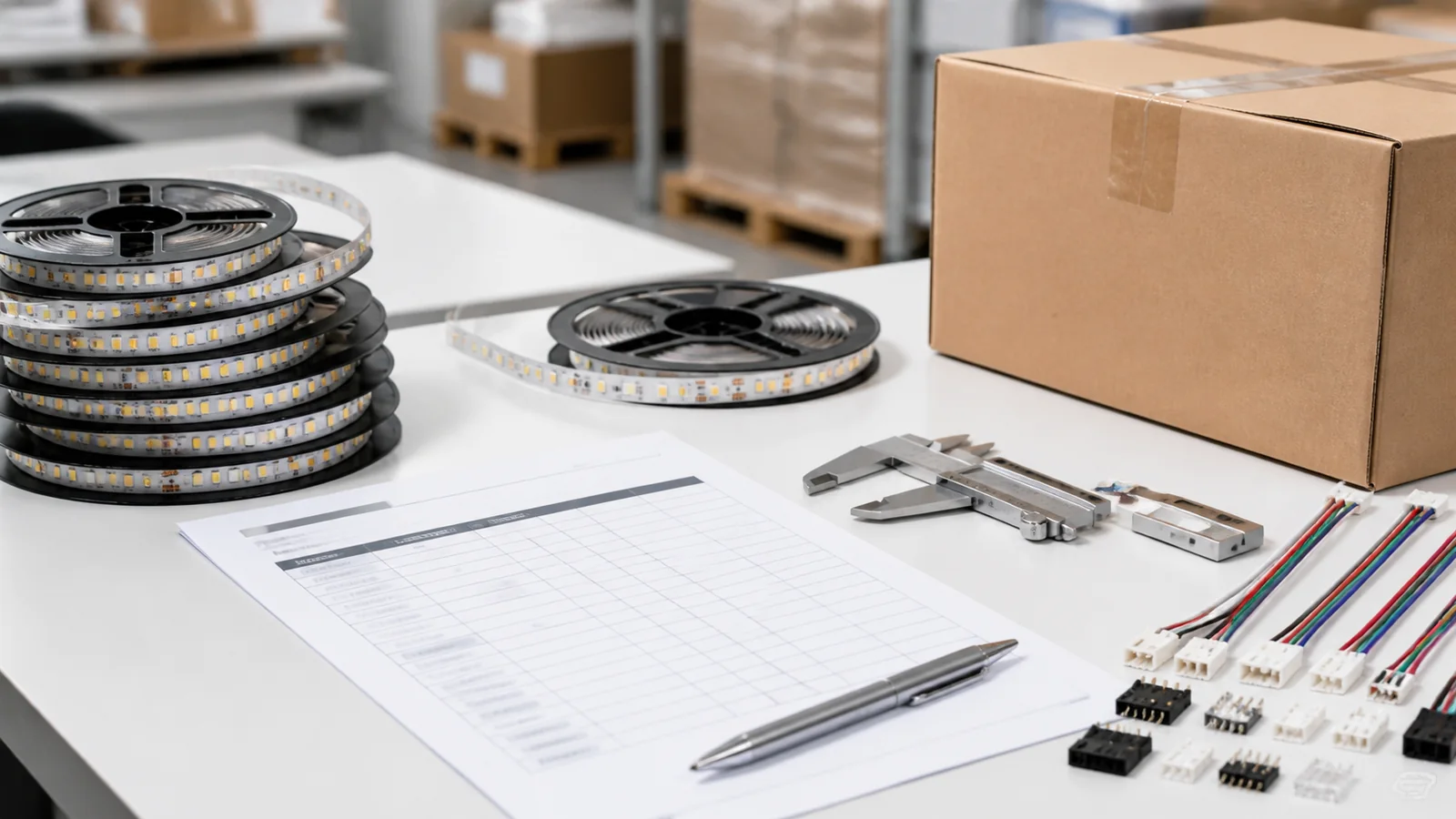
Record the tape’s voltage, watts per meter and connected length for each independently supplied circuit. Include controller consumption where relevant and identify which channels can operate together. Calculate from the exact ordered variant. Strip density alone does not establish its power.
Identify the lowest-load operating state the system can reach. That may occur when some zones or color channels are off. Keep it separate from the maximum reachable load used for capacity planning. The dimmed-strip supply-sizing guide covers the upper end of that review.
Have the commissioning team test the intended combination at full output and the required low scene, then at the project’s intermediate settings. Record flicker, dropout, restarting and unexpected output changes. Each symptom can have several causes, so the observation needs investigation before it is attributed to minimum load.
Check starting directly at the low scene after the equipment has been off. Also check the agreed behavior when power returns and when the controller changes channels or zones. A system that dims smoothly from full output may behave differently when commanded to start at the same low level.
Use the intended cable lengths, enclosure and mounting arrangement. Record supply input conditions and any dimmer settings. If an installation works only after adding more tape, document the change and have the relevant suppliers assess it. That observation alone cannot identify whether the supply, dimmer or another part of the combination set the limit.
Avoid adding a resistor or an improvised dummy load to conceal the problem. Any proposed load device needs to be specified for the exact equipment, with its heat and mounting requirements addressed. Selecting a suitable supply and control combination should be part of the design review.
Specify what must work before ordering
A useful purchasing requirement identifies both the smallest circuit and the behavior expected from it. Ask the driver and controls suppliers to confirm:
- Exact model, voltage variant and permitted output-load range.
- Control method and compatibility with the proposed dimmer or controller.
- Smallest and largest connected loads, including channel combinations.
- Lowest required operating scene and direct-start behavior at that scene.
- Off-state and restored-power behavior that the project will accept.
- Installation conditions and the record needed for final verification.
If a minimum dimming level is stated, ask what it measures and under which conditions. A control datasheet’s percentage may describe the output command; it may not be a measurement of light from this tape assembly. Check the required visual result with the actual load before ordering many identical drivers.
LEDStripStar’s low-voltage tape range can help establish the load specification. Send the circuit lengths, voltage and required low scene, with the proposed separate control equipment identified. Keep unresolved low-load compatibility questions with the driver and controller suppliers until the combination has been assessed.
Catalog & Sourcing Note
This article is prepared from our current product catalog and B2B specification workflow. Electrical, waterproofing and installation requirements vary by model and market, so confirm the final specification and approved sample before ordering.
Discuss Your Specification