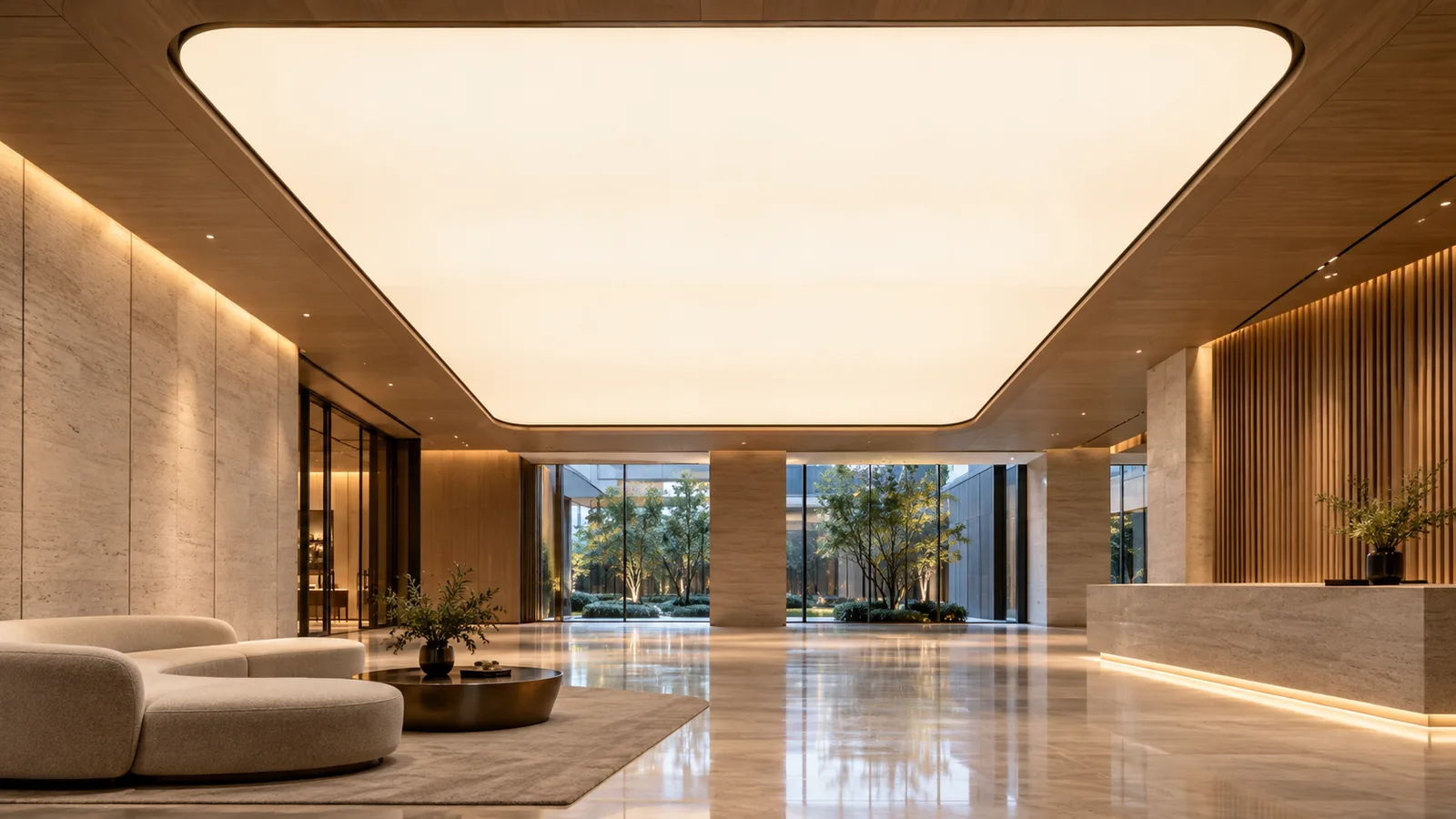
Yes, LED strips can backlight a translucent stretch ceiling when the membrane system permits it and the complete assembly has been checked. Strips above an ordinary opaque ceiling will not turn it into a luminous panel. Choose the ceiling system and approve a representative sample before ordering the repeated lighting layout.
A COB strip can appear continuous along its own length while leaving visible bands across a large ceiling. Membrane transmission, source spacing, distance to the membrane and obstructions all affect the assembled appearance. There is no universal row spacing that can be established from LED density alone.
Choose the membrane and lighting role together
Barrisol’s FAQ describes luminous ceilings made with LEDs behind translucent sheets designed for that purpose. It distinguishes lighting distributed over the area from peripheral lighting. This supports choosing a ceiling system intended for backlighting; it does not establish compatibility between a particular Barrisol system and a catalog LEDStripStar strip.
Ask the ceiling supplier for the selected membrane’s installation conditions, permitted light-source arrangement and thermal limits. Have the project team confirm applicable requirements before buying. If the intended appearance is an evenly luminous field, assess the field and its edges; if it is a perimeter glow, record that different acceptance basis explicitly.
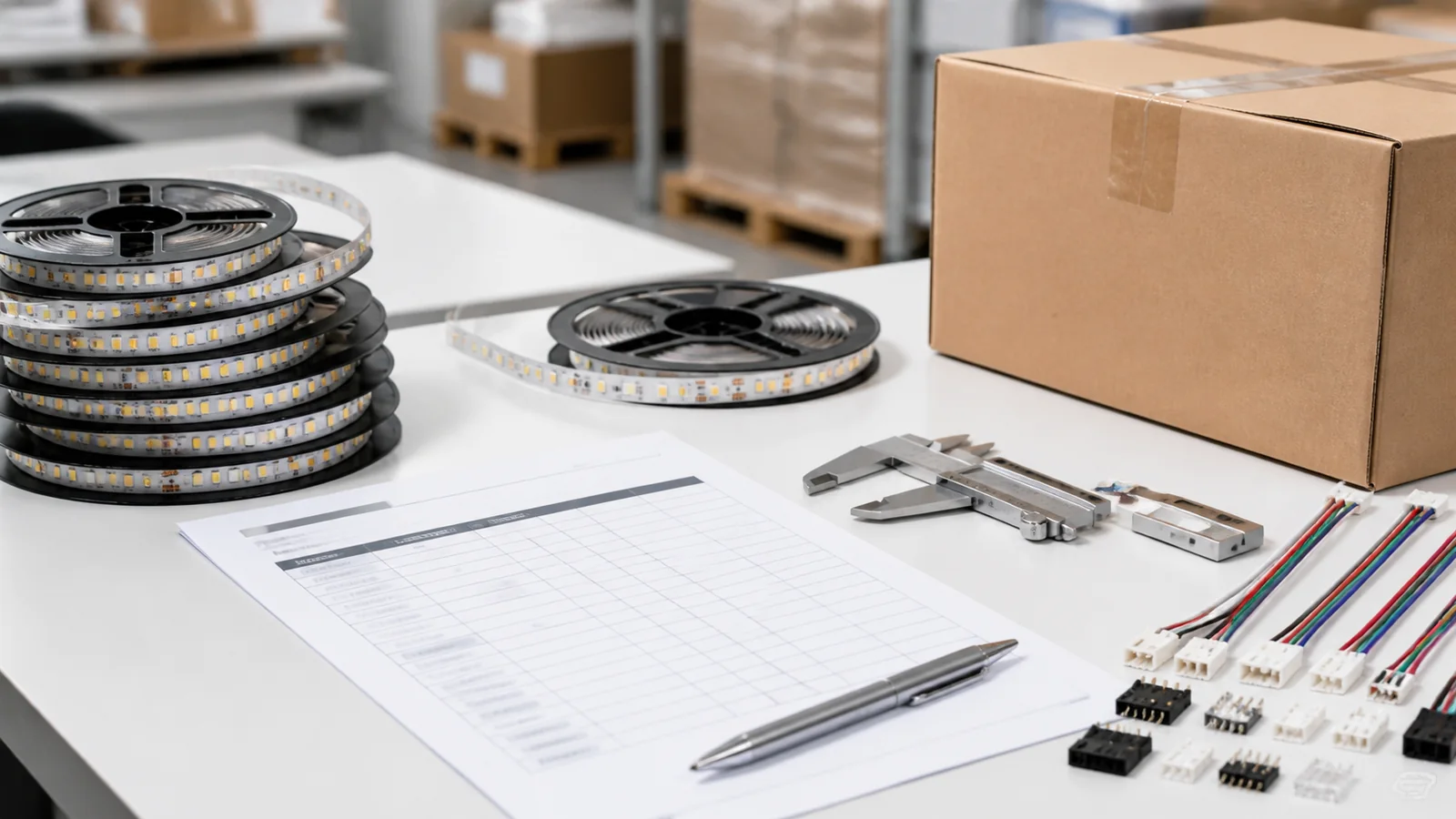
The 8mm CRI95 COB family is a source candidate to evaluate. Its listed PCB width and CRI do not tell you the membrane’s transmission, final ceiling brightness or permitted installation depth. Confirm the exact voltage and color variant, mounting and supply arrangement separately.
Make the sample include an edge and an obstruction
Build the sample with the actual membrane, support finish, row layout and depth. Include an edge, joint or structural obstruction from the final installation. Checking only a small central patch can miss an edge shadow that becomes conspicuous in the finished room.
Record row positions and depth in a section drawing. Compare the normal working scene and any dimmed scene from expected viewing positions. Keep ambient lighting consistent, and do not use a phone’s automatic exposure as the sole approval evidence. If the project requires measured illumination, its lighting designer should define the target, measurement locations and method.
| Observation in the sample | Investigate before ordering | Evidence to retain |
|---|---|---|
| Bright parallel bands | Source spacing, depth and membrane behavior | Drawing and photographs at recorded settings |
| Dark perimeter | Edge row position, frame and support shadows | Edge detail included in the approved sample |
| Uneven color | Selected variants, batches and membrane effect | Model and membrane references together |
| Visible cables or supports | Routing and obstructions in the optical cavity | Final routing detail, not an empty-cavity sample |
| Acceptable appearance only at a different setting | Required scene and delivered light | Agreed setting and any required measurement record |
This is a diagnostic checklist, not test data. Use the diffusion guide for source-pattern questions, but validate the membrane assembly on its own terms.
Resolve heat, cleanliness and maintenance before closure
Mount the sources and supplies according to their instructions and the ceiling system’s requirements. Do not attach a strip directly to the membrane or assume the space above it provides adequate cooling. Qualified personnel should assess the electrical installation; disconnect power before altering a sample or connection.
Have the installation team assess temperatures under the intended operating conditions against the selected components’ limits. A successful brief lighting demonstration cannot establish long-duration suitability. If required operating limits are unavailable, leave that part of approval unresolved.
Barrisol also discusses preventing dust and insects from affecting the luminous appearance. Ask the ceiling installer how this will be handled in the selected system. Do not add an extra sheet casually: it changes the assembly being approved.
Plan access to supplies, joints and replaceable strip sections. Establish how the installer will open and restore the membrane, and which references must match during replacement. The driver-access guide helps keep electrical service points reachable.
Send an assembly brief, not just a ceiling area
Provide the membrane reference, section drawing, repeated panel dimensions, intended lighting role, operating scene and access plan through the enquiry form. Agree the selected strip variant and sampling scope before bulk release. LEDStripStar’s standard MOQ is 500 meters and custom MOQ is 2,000 meters; confirm the classification of the requested configuration. Ceiling area alone is insufficient to determine strip quantity or approve optical performance.
Catalog & Sourcing Note
This article is prepared from our current product catalog and B2B specification workflow. Electrical, waterproofing and installation requirements vary by model and market, so confirm the final specification and approved sample before ordering.
Discuss Your Specification