Yes, if the exposed strip suits the detail
An LED strip does not need a diffuser to switch on or produce light. It can be installed in an open aluminum channel, on another suitable mounting surface, or behind a building detail that already hides the light source. The choice depends on what people can see, how the area is cleaned, and how much physical protection the strip needs.
A diffuser is an optical and protective cover. It can soften the view of individual LEDs, reduce direct glare and keep fingers or cleaning tools away from the strip. It also absorbs some light and changes the beam. Buyers should approve the strip, profile and cover together instead of treating the diffuser as a cosmetic accessory added after the order.
This distinction matters in commercial projects. A strip hidden deep above a cove lip may work well without a cover. The same strip mounted at eye level under a shelf may look unfinished and create sharp reflections.
What changes when the cover is removed
The electrical load does not change simply because the profile has no diffuser. The visual result and the operating environment do change.
Source visibility
An SMD strip has separate LED packages. Their pitch, the profile depth, the cover material and the viewing distance determine whether people see individual points. A COB strip has a more continuous phosphor surface, so it usually shows a smoother line when exposed. Reflections from polished stone, glass or stainless steel can still reveal variations, copper pads and joints.
The 8mm COB 320 LED/m CRI95 model is one catalog option for a continuous-looking source. The 8mm SMD2835 120 LED/m CRI98 model is a useful comparison when color quality and a conventional SMD construction are required. Test both in the actual profile because LED count alone does not predict the finished line.
Glare and reflection
An exposed strip can put a bright source inside the normal field of view. This is common below open shelves, inside glass cabinets and along handrails. A diffuser spreads the apparent source over a larger area, although the result depends on its material and geometry. It cannot correct poor aiming or a profile positioned directly toward the user’s eyes.
Light output
Every cover has an optical loss. A more opaque cover often hides points better but transmits less light. Do not apply a generic loss percentage from another profile. Measure the proposed strip and cover as a set, preferably at the work plane or display surface that the project uses for acceptance.
Cleaning and accidental contact
An open channel collects dust and exposes the strip to wiping, tools and loose objects. In retail fixtures, staff may clean a shelf many times before anyone services the lighting. The cover can reduce direct contact, but it does not turn an indoor strip into a waterproof assembly. End caps, cable entries, joints and the complete installation still need the construction required by the location.
Heat path
The aluminum profile and the diffuser do different jobs. The profile can spread heat away from the flexible PCB when the strip sits flat against it. The diffuser mainly changes light distribution and provides a physical cover.
The U.S. Department of Energy’s thermal management guidance for white LEDs explains that LED heat must move from the device through the circuit board and into heat sinks or the luminaire structure. Removing a plastic cover is not a substitute for selecting a suitable profile and checking the installed temperature.
Where an open LED strip can be acceptable
An open strip is worth testing when the source is fully concealed by the architecture. Examples include a deep ceiling cove, a sign box with its own face material, or a service detail where users cannot see or touch the strip.
It may also be reasonable for a temporary mock-up or an accessible test fixture. In that case, the exposed arrangement should not be carried into the finished specification by accident. Record whether the production installation uses a cover, because the visual reading and measured light level may change.
Open COB can suit a shallow detail better than widely spaced SMD when the source remains partly visible. The decision still depends on the actual bend, solder joint, cut interval and reflective surfaces around it. A smooth light line on a loose sample may show a bright joint once fitted into a mirrored cabinet.
Use an open arrangement only when the mounting surface, electrical protection, cleaning method and access conditions have been reviewed for that location. A profile without a cover is not automatically appropriate just because the strip is low voltage.
Projects that usually benefit from a diffuser
Use a diffuser when people can look directly into the profile, when reflections expose the source, or when the strip needs modest protection from routine contact. Typical locations include display cabinets, open shelving, wardrobe rails, reception counters and low wall details.
The cover is also useful when the design requires a finished linear appearance while the light is off. An exposed yellow phosphor line, PCB markings or individual packages may be visible in daylight. An opal cover gives the profile a consistent surface, though the exact color and translucency should be approved against the interior finishes.
Profile depth matters. A shallow channel places the cover close to the LEDs and may show points even with an opal material. A deeper optical chamber gives light more distance to mix. Philips’ LED strip profile instructions show the strip placed smoothly against the profile surface and the opal cover fitted flat. Bumps, lifted tape and poorly seated covers can create visible irregularities.
Do not specify “opal diffuser” as the only optical requirement. Record the profile section, internal depth, cover code, strip model, LED density, mounting orientation and viewing distance. Those details let purchasing compare equivalent samples.
Run one mock-up with both cover conditions
Build a representative section with the final materials around it. A one-meter sample is often enough to reveal dots, reflections and cover fit, but it may not show thermal behavior or voltage drop across the full run. Use the actual driver and dimming level for the optical review.
Check the sample from the positions that matter:
- normal standing and seated eye levels;
- the closest customer viewing distance;
- reflected views in glass, polished metal or stone;
- full output and the lowest required dimming level;
- daylight, general room lighting and the intended night scene.
Measure illuminance or another agreed project value with the cover fitted and removed. Use the same meter position, supply voltage and warm-up time. Record the difference for that exact combination instead of treating it as a universal diffuser loss.
Inspect the profile after operation has stabilized. Mark the temperature measurement points and test the condition that represents the finished installation, including the cover if one will be used. The DOE’s LED lighting fact sheet notes that heat sinking and airflow need to keep both LEDs and electronic power components within an acceptable operating range.
Put the diffuser decision into the purchase file
Include these items in the RFQ or approval sheet:
- exact strip model, voltage, watts per meter and PCB width;
- profile drawing, finish, internal width and depth;
- diffuser material, finish and supplier code;
- installed orientation and available ventilation;
- expected viewing distance and reflective nearby materials;
- required light level with the final cover installed;
- maximum run, feed points, driver and dimming method;
- cleaning method, access and risk of contact;
- approved photographs and measurement results from the mock-up.
If the design will use no diffuser, write “open profile” on the drawing and sample label. This prevents a fabricator from adding a cover later or a purchasing team from assuming that a standard profile kit includes one.
Send the section drawing and viewing conditions through the project quotation form. The aluminum profile guide can help define the dimensions before requesting samples. Final strip construction and all order details are confirmed by model before production.
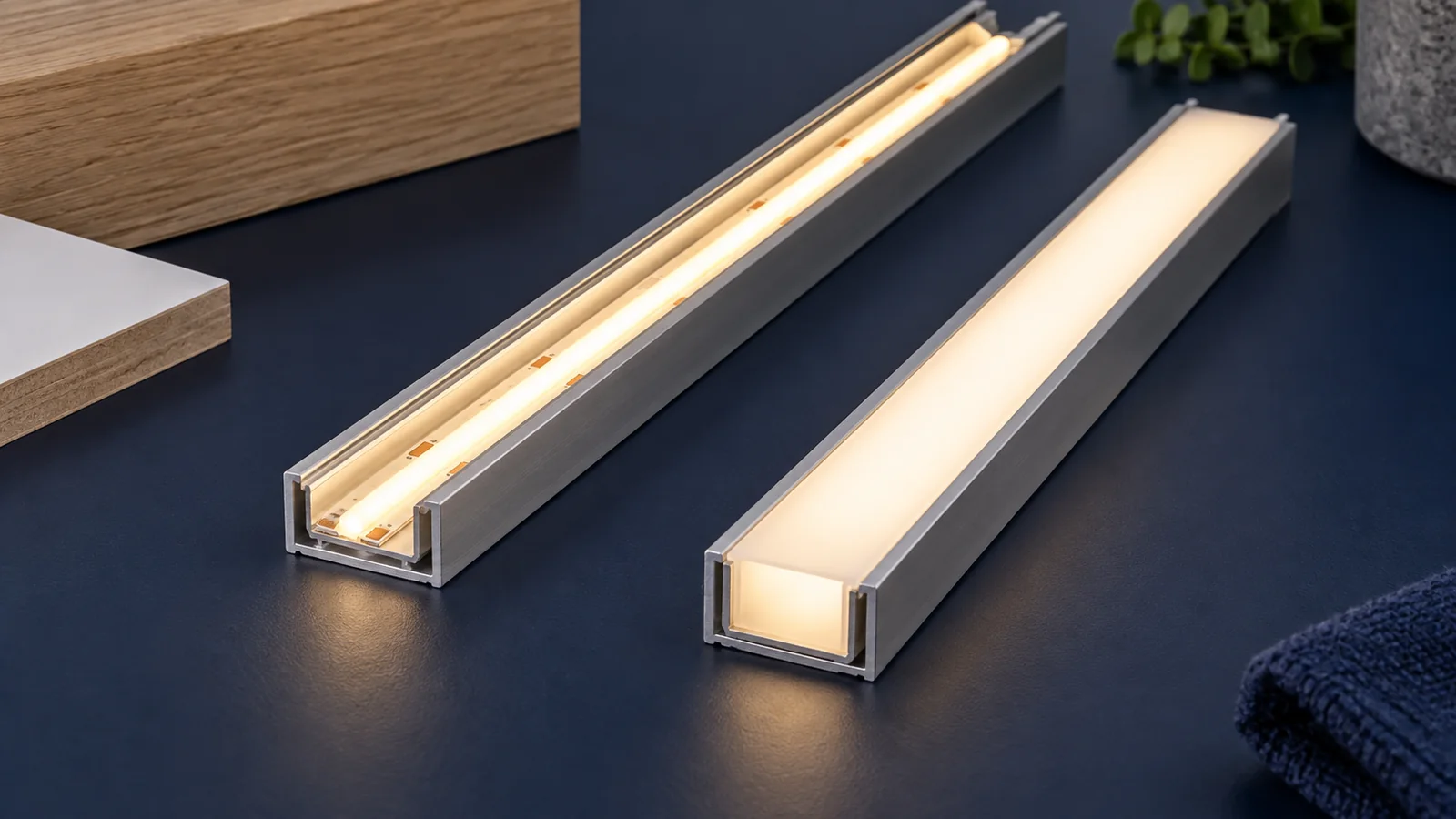
The header image is an editorial comparison of open and diffused profiles. It is not a photometric test or a production sample.
Catalog & Sourcing Note
This article is prepared from our current product catalog and B2B specification workflow. Electrical, waterproofing and installation requirements vary by model and market, so confirm the final specification and approved sample before ordering.
Discuss Your Specification