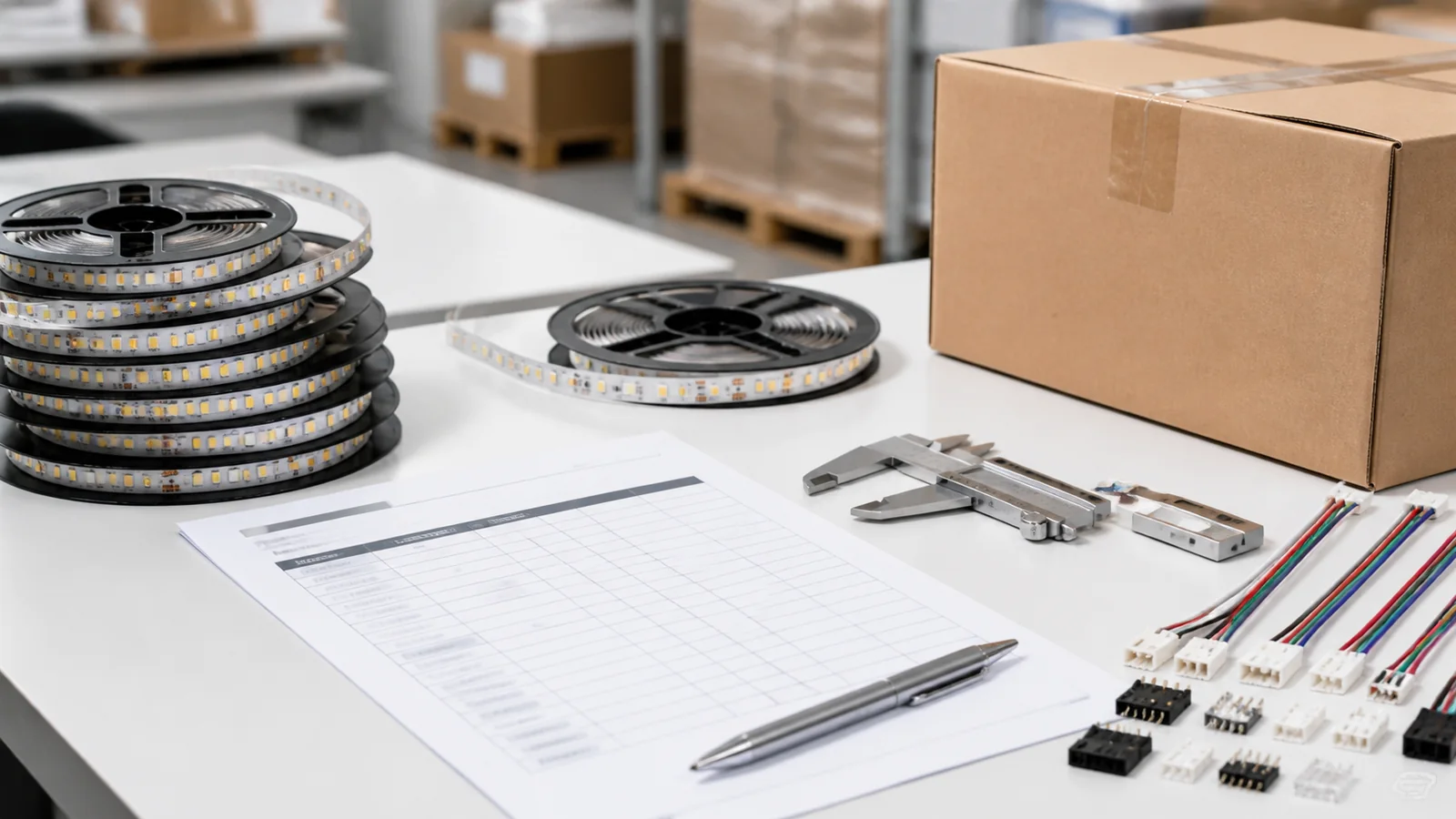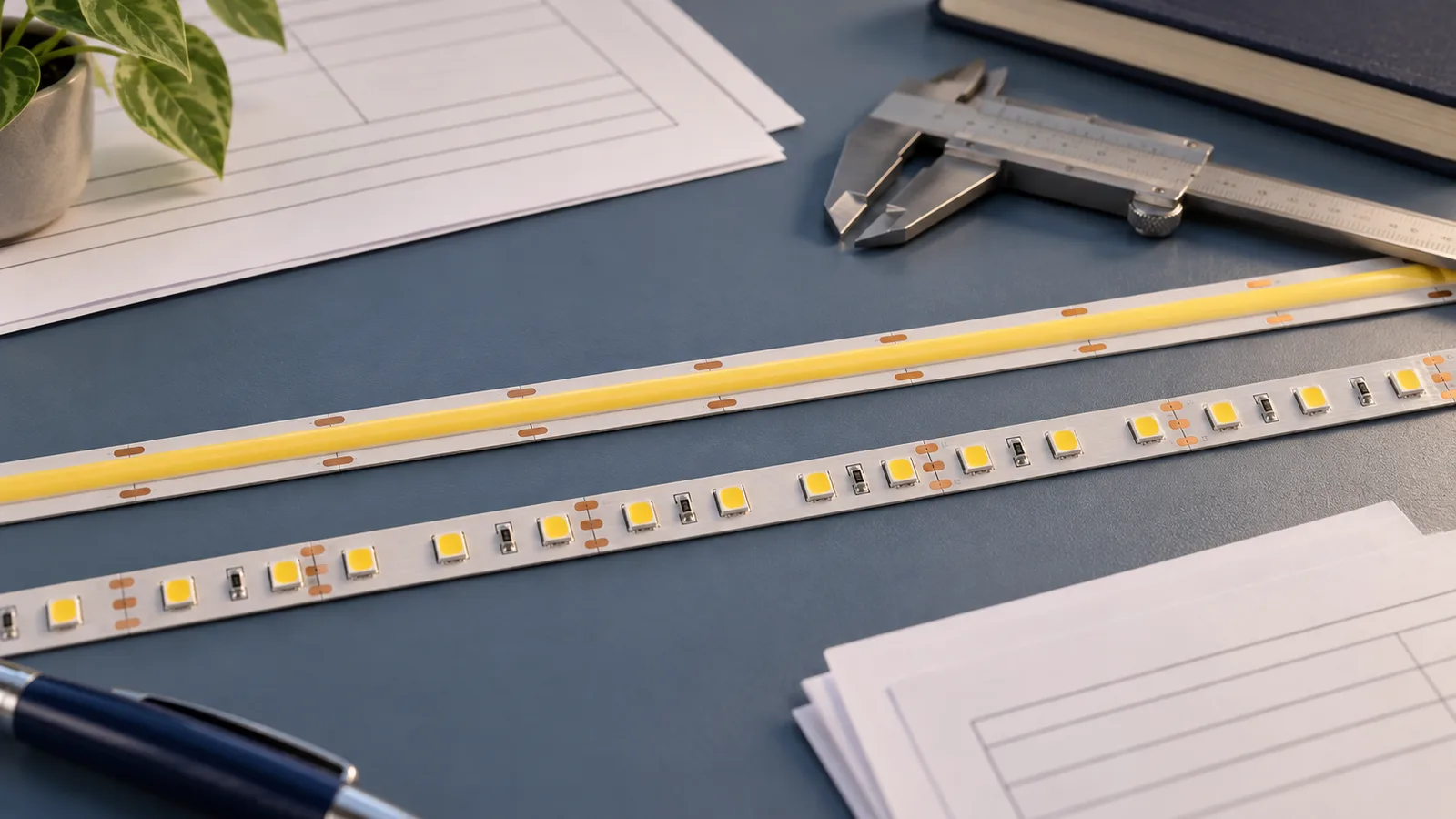
Approve a proposed LED strip substitute by comparing it with the accepted order specification, recording every changed field and repeating the checks affected by those changes. Release the revised model in writing before production. A shared voltage, LED brand or headline brightness does not establish that two finished strips are interchangeable.
A distributor may accept an alternative for a standalone display but reject it for a continuous installation already partly supplied. Tell the supplier where the strip will be used and who can approve the change before asking for a comparison. This is a buyer’s approval procedure; any substitution by LEDStripStar requires agreement.
Freeze the model being replaced
Keep the accepted model, specification revision, selected voltage, color and construction together with the physical sample. Record where the sample is held and the date of approval. A photograph of an illuminated reel cannot establish its electrical ratings or component details.
For example, the 8mm CRI95 COB family lists DC12/24V options. The family name alone does not identify which voltage was accepted. If the reference order is incomplete, resolve those missing fields before deciding whether an alternative matches.
Use the existing sample-approval record as the baseline. Change approval is a separate decision: the original sample remains evidence of what the buyer previously accepted.
Require a side-by-side change record
Ask the supplier to complete the accepted and proposed columns, including fields described as unchanged. Blank entries should mean unresolved, not equivalent. The following table is an approval template, not a comparison of tested products.
| Field | Record for accepted and proposed products | Why it affects approval |
|---|---|---|
| Model and revision | Exact identifier and selected variant | Prevents a family name hiding a different build |
| Voltage and power | Specified voltage, power per meter and conditions | Can change the supply and load plan |
| Light output and color | Available output data, CCT, CRI and matching requirements | Affects adjacent runs and merchandise appearance |
| Construction | COB/SMD arrangement, PCB width and cut rule | Can change profile fit, joints and visible source pattern |
| Component identity | Stated LED brand and exact designation where established | Shared branding does not settle operating characteristics |
| Terminations and protection | Wires, polarity, connectors, coating and end treatment | Affects connection and exposure requirements |
| Commercial terms | Quantity, price, timing, packing and agreed warranty | Technical acceptance does not accept a commercial change |
Lumileds’ explanation of binning describes differences in light output, color and forward voltage within LED families. This supports asking for the relevant component and finished-product details; it is not evidence about the bins used in an unspecified LEDStripStar order.
LEDStripStar uses Sanan LEDs. An exact chip or package designation must be established for the selected build if the buyer requires it. Do not fill a missing designation with a likely part number or transfer another manufacturer’s figures into the comparison.
Repeat the checks the change can affect
Start with the installation interface. Check the proposed strip in the actual profile, verify permitted cut locations and compare terminations with the agreed connection. Qualified personnel should assess electrical changes with the selected supply and controls; physical fit does not prove electrical compatibility.
Then compare the accepted and proposed samples under consistent conditions. Use the same mounting, diffuser, supply settings and viewing distance. Include an adjoining accepted section when the project requires visible continuity. If dimming is required, compare the normal scenes and relevant low-output operation as well as full output.
Where a decision depends on measured output or another test, agree the method and evidence before release. If that evidence is unavailable, record the limit and leave the decision pending or reject the proposal. A visually similar sample cannot establish a laboratory performance claim.
Release a specific revision, not a blanket permission
Identify the approving party, affected quantities and permitted application. Write whether the change applies only to this purchase order or also to later releases. Update packing and stock records so warehouse staff can distinguish the revision; use the batch-traceability plan to retain the connection.
LEDStripStar’s current standard MOQ is 500 meters and custom MOQ is 2,000 meters; the ordinary product warranty is 2 years. Confirm how the proposed configuration is classified and record any revised quotation separately. Approval must not silently accept different quantities, timing or warranty conditions.
Send the change record and application through the quotation form. If the buyer cannot approve the alternative, request a quotation for the original specification or an explicitly revised delivery plan. Do not release production while the technical comparison still contains decision-critical blanks.
Catalog & Sourcing Note
This article is prepared from our current product catalog and B2B specification workflow. Electrical, waterproofing and installation requirements vary by model and market, so confirm the final specification and approved sample before ordering.
Discuss Your Specification