Test the finished waterproof assembly, not a loose strip alone
A waterproof LED strip sample should represent the item that will be installed. Include the production strip, cable entry, end seals, any factory joints, connectors and mounting method. Testing an untouched reel says little about a project that will be cut into short pieces and terminated on site.
Start by defining the required exposure. Rain, cleaning spray, temporary puddles and continuous immersion are different conditions. The buyer should identify the location, mounting orientation, expected water source, time of exposure, ambient range and maintenance method before agreeing on a construction.
IEC 60529 covers degrees of protection provided by enclosures under the IP Code. The IEC listing for IEC 60529 identifies the standard and its scope. An IP designation is not a general promise that every cut, connector and field repair will remain protected in any installation.
Freeze the sample construction before testing
Give the sample a buyer part number and revision. Record enough detail for the supplier and receiving inspector to identify the same construction later:
- LED strip model, voltage, power, PCB width and LED density;
- encapsulation type and overall cross section;
- reel or finished assembly length;
- cable type, conductor size, exit direction and entry seal;
- end cap, sealant and curing method;
- cut interval and approved cutting tool;
- connector or solder joint construction;
- mounting clips, channel, adhesive or other restraint;
- allowed bend direction and minimum bend radius;
- lot code and sample photographs.
Do not accept a description such as “IP68 silicone strip” as a complete assembly specification. Two products with the same IP code can use different extrusion, end cap and cable-entry designs. A field cut can also change the condition that was originally evaluated.
The current catalog includes a COB 8mm 320 LED/m IP68 model listed at DC12/24V and 10W/m, plus a SMD2835 8mm 120 LED/m IP68 model listed at DC24V and 8W/m. These are different electrical and optical products. Select the exact model before defining the test pieces.
Approve three kinds of sample
One perfect factory sample can hide the risks introduced by cutting and assembly. Ask for samples that represent the production process.
Uncut reference sample
Keep one untouched piece as a reference for extrusion clarity, dimensions, flexibility, light output and factory cable entry. Label it and do not use it for destructive testing until the other comparisons are complete.
Factory-finished cut sample
Order several pieces at the project length with the intended end caps and leads. They show whether production can repeat the cut position, sealant amount, cable direction and cure without contaminating the light-emitting surface.
Site-prepared sample
If contractors will cut or reconnect the strip, have the installation team make samples with the approved tools and materials. This often reveals missing instructions, awkward clearances and inconsistent sealant application before site work begins.
LEDVANCE’s LED strip system installation guidance instructs users to cut only at designated areas and make a straight cut. Its IP67 product data also states that cut protected strips should be stored with end caps fitted. Follow the instructions issued for the selected product rather than transferring a method from another brand or construction.
Write a controlled water test plan
The purchase file should state who performs the test, which samples are used, the setup, duration, conditioning, electrical state, acceptance criteria and required records. Do not improvise a spray or immersion test and call it an IEC test. A standards claim requires the specified apparatus, procedure and reporting scope.
Intertek’s IP testing overview describes IP testing as an evaluation of the protection provided by a product enclosure against dust and fluid ingress under IEC 60529. When a formal report is required, define the exact model and assembly to be covered, then agree on the laboratory and document scope before ordering.
For internal sample comparison, use a written test that reflects the intended application without presenting it as formal compliance testing. A useful plan can include:
- Photograph and inspect every sample before exposure.
- Measure dimensions and record the seal condition at both ends and the cable entry.
- Run a pre-exposure electrical and visual check at the rated voltage with a suitable power supply.
- Isolate power before handling or moving samples around water unless the approved test procedure specifically requires energized operation and qualified personnel provide the safe setup.
- Apply the agreed spray, temporary water contact or immersion condition using controlled time, depth, orientation and water temperature.
- Dry the outside according to the written procedure without opening the sample.
- Inspect for visible water, bubbles, lifted seals, discoloration or trapped moisture.
- Repeat the electrical and visual check only after the sample is safe to energize.
- Open designated destructive samples, when agreed, to inspect internal moisture paths.
Use more than one sample. A seal process can pass once and fail when cable position, sealant volume or curing varies. The sample quantity should reflect the purchasing risk and the agreed inspection plan. The website does not state a universal quantity or pass rate for every project.
Compare electrical performance before and after exposure
Record the supply voltage at the feed, current or power, visible light condition and any insulation or continuity checks required by the approved procedure. Measurements need the same instrument, connection method and operating condition before and after exposure.
Do not use brightness by eye as the only result. Water can enter a construction without causing immediate darkness. Corrosion, leakage and intermittent faults may develop later. If delayed effects matter, define a post-test observation period and switching schedule before the samples arrive.
Long protected reels require a separate voltage-drop review. The 8mm SMD IP68 catalog model has a listed 100m supply length, but that is not a promise that 100m can be powered from one end. Feed arrangement, conductor resistance, watts per meter and allowable voltage drop determine the powered run. Use the voltage-drop calculation guide and approve the actual circuit plan.
Check bending after sealing. Sharp bends near the cable entry or end cap can load the joint even when the middle of the strip bends freely. Mount test pieces in the planned clips or channel, then inspect whether the installation pulls on the seal.
Turn sample approval into receiving checks
Keep the approved samples, drawings and test record available to receiving staff. Incoming inspection should compare the shipment with the approved revision before cartons are released to a project.
Start with identity and workmanship:
- model and lot marking;
- ordered length and quantity;
- cross-section dimensions;
- cable position and lead length;
- end-cap seating and sealant coverage;
- surface damage, bubbles, cracks or contamination;
- cut position and polarity marking;
- reel winding and packing that does not crush the strip.
Select cartons across the shipment, not only the easiest carton at the top. Record the sampling method in the purchase agreement. If the order uses factory-finished assemblies, include pieces from different production times or cartons in the functional review.
Run the agreed power-on check at the correct voltage. Compare color and visible continuity, then inspect connections for heat or instability under the defined load. Any destructive water test at receiving should use a sample quantity and disposition agreed before shipment. A test that destroys saleable assemblies affects both quantity and cost.
When a failure appears, quarantine the affected lot and preserve the sample. Photograph the exact location, carton, lot code, electrical setup and exposure condition. Cutting the failed sample apart before both sides agree on the inspection can erase the path that needs investigation.
Items to settle before the purchase order
Add the following to the RFQ and purchase order:
- installation environment and water exposure;
- selected strip model and protected construction;
- finished lengths, cut responsibility and joint locations;
- cable entry, end treatment and mounting drawing;
- sample types and approval revision;
- internal comparison test, formal IP test, or both;
- laboratory and report scope if third-party testing is required;
- incoming inspection method and sample disposition;
- handling, storage and installation instructions;
- response process for a nonconforming lot.
Do not request a test report after production and assume it will cover the ordered configuration. The model, construction, seal details and document scope need agreement in advance. A catalog IP label does not establish the document scope for an order. Define any special test or document requirement and obtain written acceptance before production.
Send the exposure description, assembly drawing, cut plan and inspection requirement through the quotation form. Compare available constructions in the waterproof LED strip category, then approve the exact model and finished sample before bulk production.
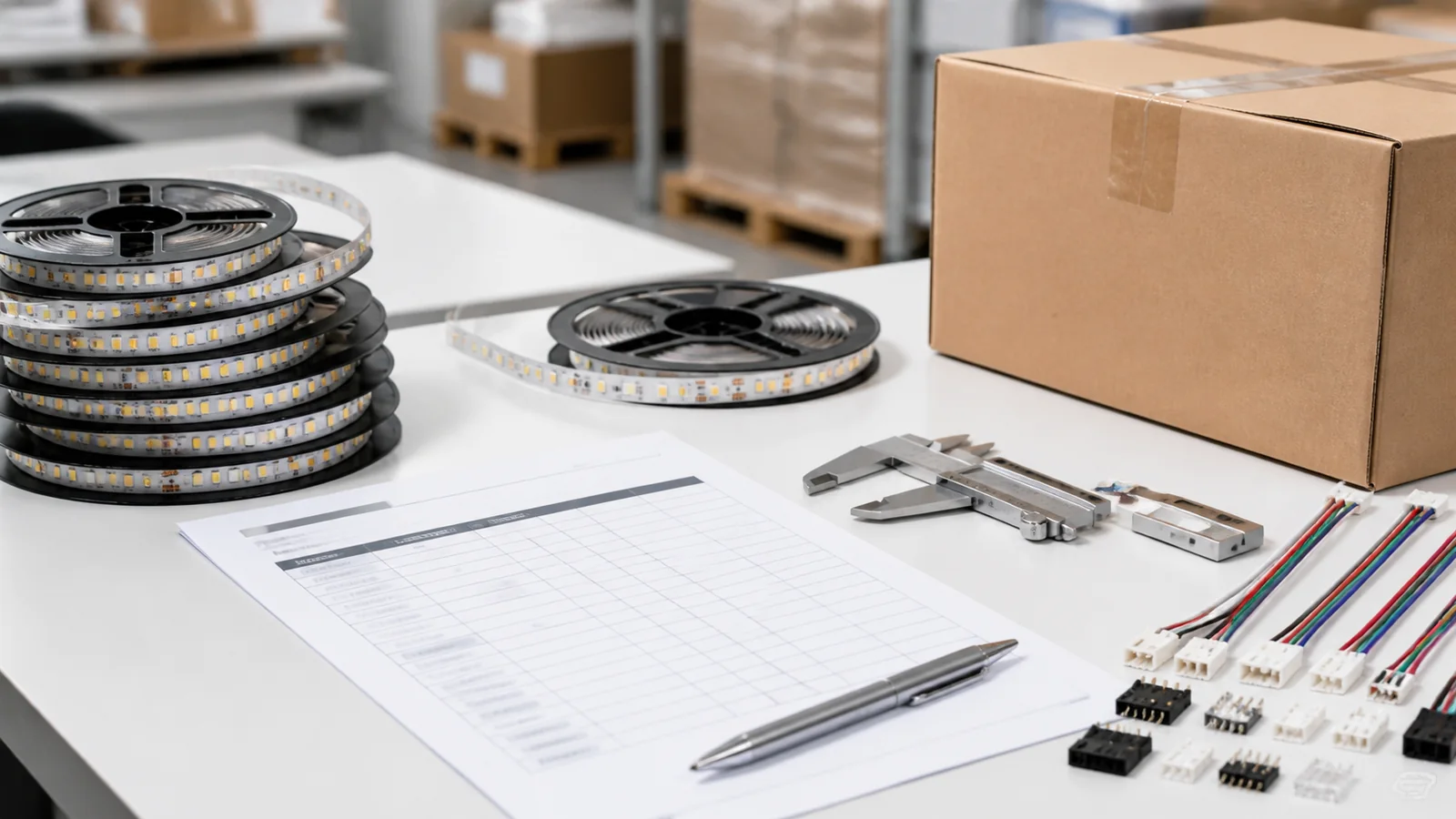
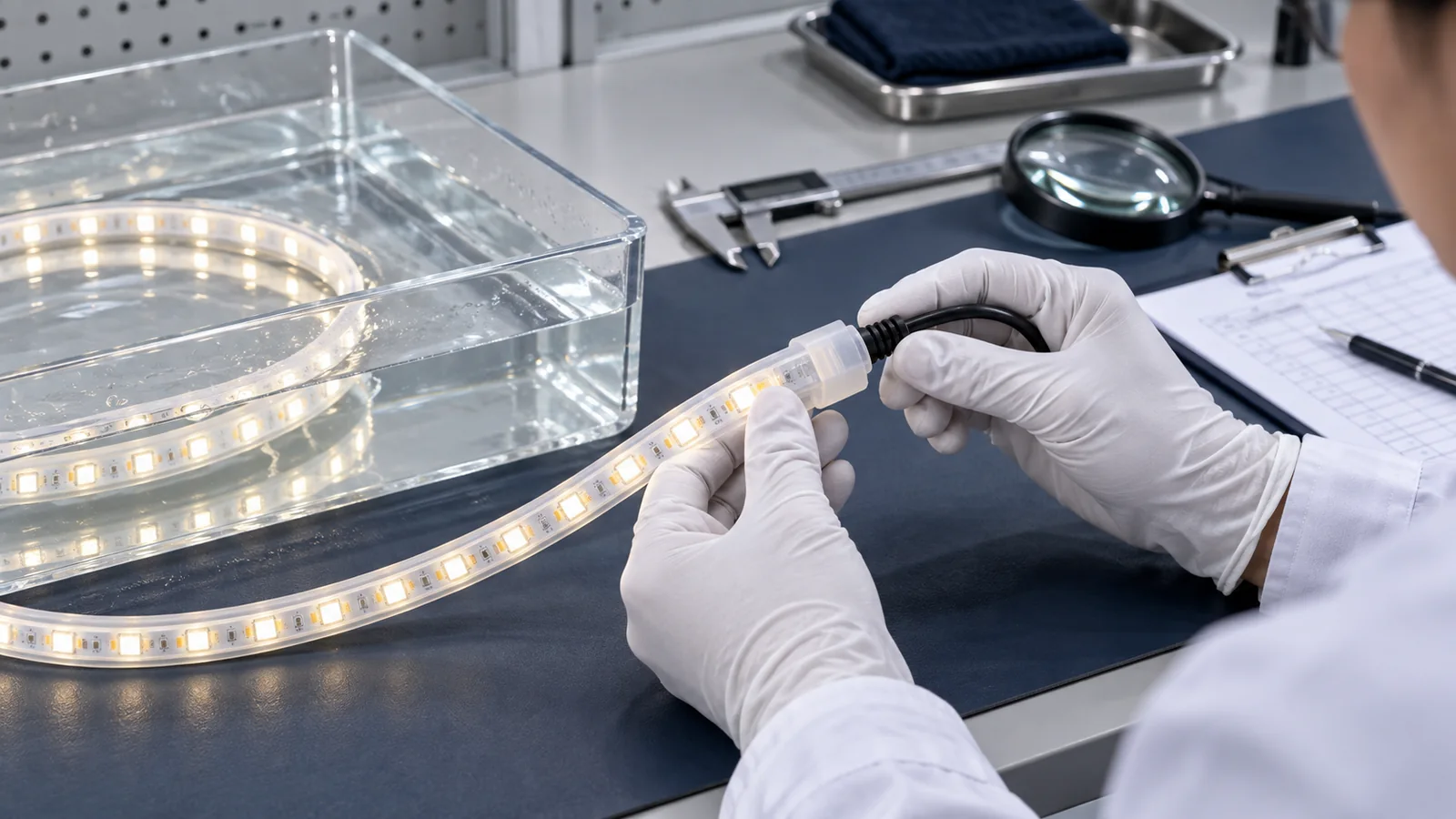
The header image is an editorial concept of a waterproof-strip inspection. It is not an accredited test, factory record or evidence for a product rating.
Catalog & Sourcing Note
This article is prepared from our current product catalog and B2B specification workflow. Electrical, waterproofing and installation requirements vary by model and market, so confirm the final specification and approved sample before ordering.
Discuss Your Specification