No. A connector that snaps shut may still be wrong.
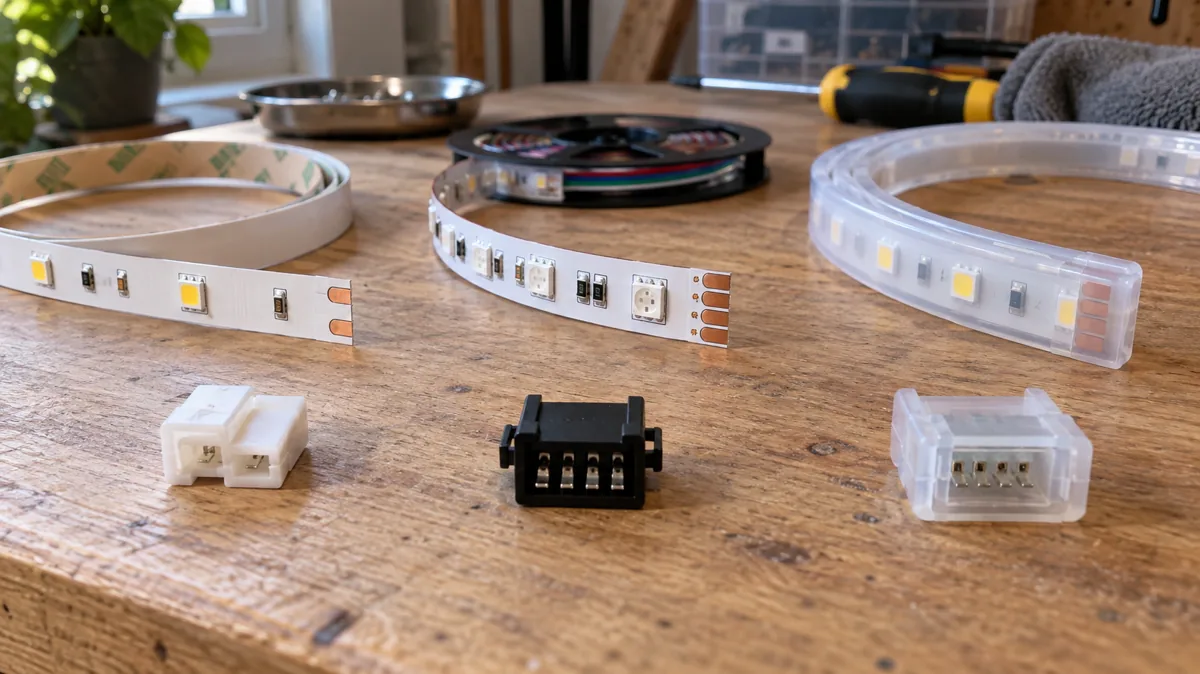
LED strip connectors are not universal. The same plastic clip can appear to fit two reels while its contacts miss the copper pads, its current rating is too low, or its seal is unsuitable for the installation. Match the connector to the exact strip and joint, not just to a shop label such as “8mm LED connector.”
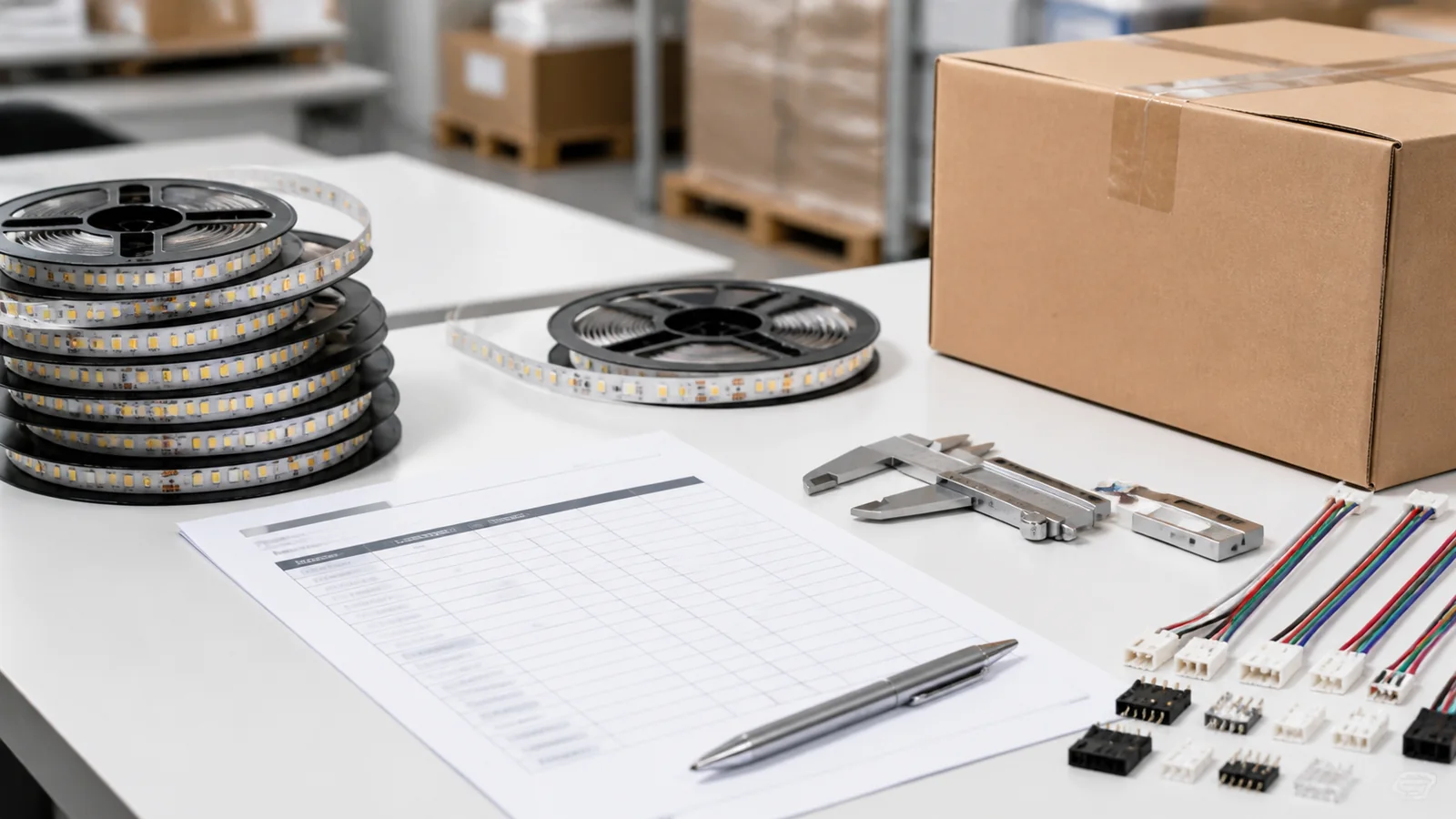
The quickest decision is to lay the proposed strip end and connector drawing side by side. Check the exposed PCB width, pad count and pitch, polarity or channel order, rated voltage and current, strip thickness, and environmental construction. Then make and test one production-intent joint.
This is not only a theoretical distinction. LEDVANCE separates connectors for white, tunable-white, RGB, RGBW, COB and different protection classes. Its LED strip system guide identifies two-, three-, four- and five-pin accessories as different parts of a matched system. Those are examples of product-specific design, not approval to use an LEDVANCE accessory on our strips without testing.
The seven checks that actually decide compatibility
- Exposed PCB width. Measure the board at the cut end, not the silicone sheath or outer reel diameter. A connector for an 8mm bare PCB does not automatically fit an 8mm PCB inside a larger protective body.
- Copper-pad geometry. Count pads and inspect their spacing, length and distance from the cut edge. Some short-cut products leave less contact area than a generic clip expects.
- Circuit type. Single-color white usually needs a different contact arrangement from RGB, RGBW, tunable white or addressable data strips. The pin count alone does not tell you the channel order.
- Voltage and load. A connector must suit the circuit voltage and the current through that joint. Calculate branch current from the downstream load and voltage, then check the connector manufacturer’s rating and any temperature derating. At 60W on a 24V branch, the nominal current is 2.5A; this is an arithmetic example, not a rating for a particular connector.
- PCB thickness and surface. A clip designed for a thin uncoated board may not close correctly over a thicker PCB, encapsulation or solder bump. A closed lid is not proof of contact pressure.
- Environment and sealing. An open indoor clip is not a waterproof joint. A protected strip cut in the field requires a compatible end seal, cable entry and installed-system inspection. The strip’s listed IP rating does not transfer automatically to a joint.
- Mechanical path. Check strain relief, bend immediately after the joint, profile clearance and service access. A contact that works on a bench can open when a cable is pulled through a channel.
For example, our 8mm CRI95 COB model lists DC12/24V and an 8mm PCB. That does not establish a universal connector specification; the ordered voltage, pad drawing and installation detail still need checking. An IP68 24V SMD construction adds a sealing problem that a bare-board connector cannot solve by itself.
Three mistakes worth catching before a bulk order
The clip fits but the light is intermittent. The pad may be too short, oxidized, covered by coating or out of line with the metal contact. Do not repeatedly force the lid shut. Inspect the pad and take a close-up photograph after assembly.
The colors are wrong. RGB and RGBW joints can have different channel orders even with a matching pin count. Confirm the strip markings and controller diagram. Test every color and, for addressable strip, data direction and the exact controller protocol.
The joint works indoors but fails outside. An IP-rated reel and an unsealed field cut are different systems. Include the cut-end seal, cable gland, mounting orientation and drainage in the sample. Read the connection waterproofing guide before calling the assembly suitable for exposure.
High-voltage AC220V strip is a separate case. Never adapt a low-voltage clip because its body appears to fit. Use the accessories specified for the exact mains-voltage product, with electrical design and installation by qualified personnel.
Approve the assembled joint, not the connector alone
Ask for a strip-to-strip and, if needed, strip-to-wire sample using the exact proposed reel, cut location, cable and connector. Check polarity, contact retention and visible damage. Run the longest intended downstream branch at its relevant operating state; inspect joint temperature and any flicker after warm-up. Bend and strain the cable only within the connector supplier’s instructions. If the joint is exposed, test the completed sealing construction to the project requirement.
A soldered joint can be a better choice when pad geometry or current makes a clip unreliable, but it still needs insulation, strain relief and environmental sealing. See the soldering guide; solder is not a shortcut around a poor waterproof detail.
What to put in the connector RFQ
Send the exact strip model and voltage, close-up and end-view photographs of a marked cut, exposed PCB width and pad layout, downstream watts per branch, joint quantity, cable exit, profile section and expected exposure. Ask the supplier to state the connector model, electrical rating, sealing method and assembly instructions. If a replacement is being sourced for an installed system, include the original controller and as-built drawing.
For a model-matched proposal, send those details with your quote request. A connector part number without the strip and branch information is not enough to approve an installation.
Catalog & Sourcing Note
This article is prepared from our current product catalog and B2B specification workflow. Electrical, waterproofing and installation requirements vary by model and market, so confirm the final specification and approved sample before ordering.
Discuss Your Specification